Ground mount solar design is a strong lead source for farms, rural homes, factories, warehouses, charging sites, and small utility projects. Roofs often limit tilt, access, and expansion. Open land gives more freedom, but it also brings tougher choices: how the array should face the sun, which solar racking structure fits the site, and what foundation will hold after wind, rain, frost, and soil movement.
A good ground mounted solar system is not just a panel layout. It is a field-built energy asset. Every choice affects energy yield, installation speed, inspection results, maintenance access, and future needs such as battery storage or EV charging.
Start With Site Conditions, Not Panel Count
Many weak projects start with the same mistake: counting modules before reading the land. Site details decide whether the job is smooth or full of rework.
Before pricing a commercial solar project, installers should check land shape, shade, soil, drainage, trench length, utility access, and local code requirements. Even a small slope can change pile depth, row spacing, and cable routing. A shaded fence line may cut morning production. A wet corner may need a different foundation from the rest of the array.
Field checks installers should not skip
A useful site visit should confirm:
- Usable land area after setbacks, roads, trees, and service zones
- Best azimuth, tilt angle, and expected row spacing
- Shading from buildings, poles, hills, fences, and future vegetation
- Soil type, rock level, frost depth, and drainage path
- Distance to the service entrance, transformer, inverter area, or battery room
- Space for maintenance vehicles and mowing
This early work makes the proposal more realistic and helps crews avoid field changes.
Choose Solar Racking for the Site and the Crew
Solar racking is the frame that carries the full project. It must hold modules at the planned angle, deal with wind and snow loads, and let installers mount panels without wasting labor.
Most ground mount solar racking fits into three groups: fixed-tilt, adjustable, and tracking. The right choice depends on project size, energy target, land cost, crew skill, and service expectations.
Fixed-tilt solar racking
Fixed-tilt racking is popular because it is simple, strong, and cost friendly. The tilt angle is set during installation and usually stays the same for the life of the system. It works well for residential ground arrays, farms, factories with extra land, and many C&I solar projects.
Installers often prefer fixed-tilt systems because fewer moving parts mean fewer service calls. The layout is easier to permit, and crews can repeat the same assembly steps across each row.
Adjustable and tracking structures
Adjustable solar mounting brackets allow seasonal tilt changes. They can help where winter energy is more valuable or where snow shedding matters. The tradeoff is labor. Someone must change the tilt safely, and the structure must lock firmly after adjustment.
Tracking systems move panels during the day to follow the sun. They can raise production in large open sites with strong direct sunlight. They also add motors, controls, moving joints, and more service planning.
| Racking type | Best fit | Main advantage | Watch-out |
| Fixed-tilt | Homes, farms, small C&I sites | Simple build, low maintenance | Lower daily capture |
| Adjustable | Seasonal energy needs | Better angle control | Safe adjustment needed |
| Tracking | Large open ground projects | Higher energy yield | More service work |
Match the Foundation to Soil and Load
The foundation is where solar foundation design becomes site-specific. If the ground connection moves, the array can lose alignment, stress wiring, or damage modules. A soil report may look like an extra cost, but it often prevents expensive changes during installation.
Loose fill, clay, sand, rock, water tables, and frost all behave differently. A cheap foundation can become costly if crews hit rock or piles refuse to drive straight.
Common foundation options
Driven pile foundations suit many larger ground mount solar installation projects. Steel posts are driven into the soil with pile-driving equipment. They are fast when soil is consistent and access is good.
Ground screw foundations work well for smaller sites, mixed soil, farms, and light commercial projects where lower concrete use is preferred. They also make future removal easier on leased land.
Concrete footings add mass and bearing area. They are useful for soft soil or higher load sites, but they add excavation, curing time, and more cleanup.
Ballasted solar foundations use weight instead of deep ground penetration. They fit capped landfills, rocky sites, paved areas, or temporary projects. The design must still account for drainage, settlement, and equipment access.
Plan Row Spacing, Tilt and Cable Routing Together
After racking and foundations are chosen, layout ties the system together. Good row spacing limits shade from one row to the next. Tilt angle affects energy yield, snow behavior, wind load, and visual impact. Cable routing affects voltage drop, trench cost, and future troubleshooting.
Practical layout rules for installers
On flat land, rows should be spaced far enough to reduce winter shading during low sun hours. On sloped ground, spacing may need to change row by row. A clear service aisle is often worth more than one extra row squeezed into a poor corner.
Cable management deserves the same care as module alignment. Wires should stay away from sharp steel edges, standing water, animal paths, and maintenance tools. Labels should be placed where technicians can still read them after years of sun and dust.
For battery-ready systems, leave a clean path between the PV array, inverter area, and storage equipment. A customer may start with grid-tied solar and add backup power later. Planning that route early can save trenching and downtime.
Build the Installation Workflow Into the Design
A strong drawing should match how crews actually work. If the plan looks good on screen but is hard to build, labor costs rise and field changes become more likely.
A field-friendly sequence
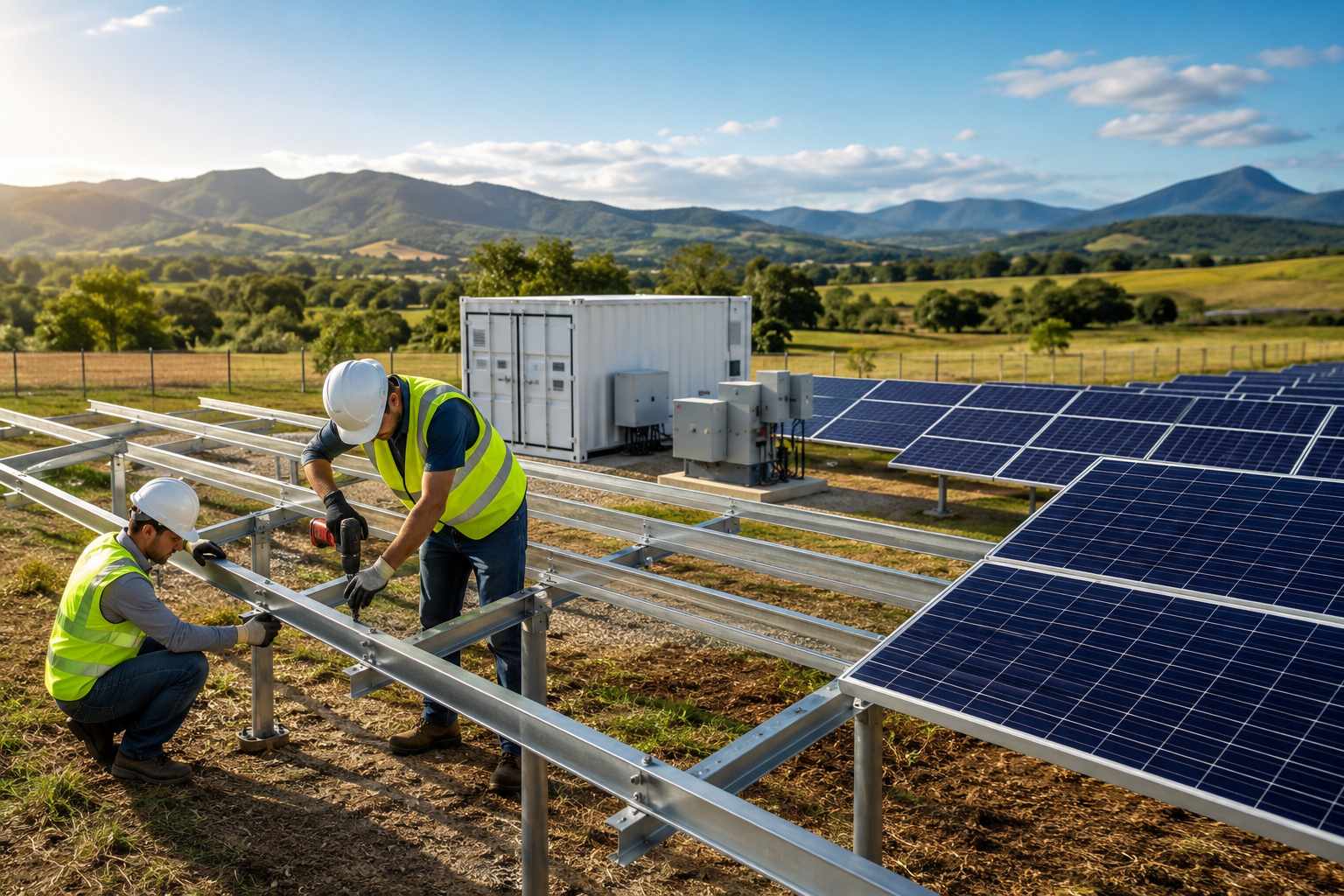
A typical ground mount solar installation process runs in this order: mark the array, prepare access, install foundations, assemble racking, mount modules, pull DC wiring, set inverter equipment, connect AC wiring, test communication, and commission the system.
During foundation work, crews should check post position and height often. During racking assembly, torque values, rail alignment, and module clamp zones should be checked before panels cover the frame.
Commissioning should not be rushed. Installers should test string polarity, open-circuit voltage, grounding, inverter startup, monitoring, shutdown devices, and battery communication when storage is included. A clear solar commissioning checklist lowers call-backs.
Design Ground Mount Solar for Storage Growth
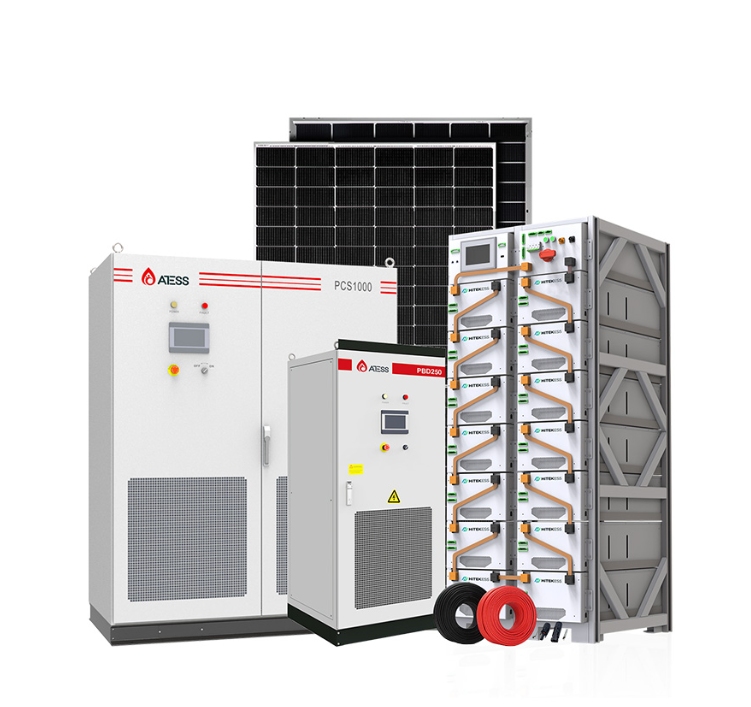
Many ground mounted solar systems now start with a simple customer question: “Can this also give backup power?” For homes, that may mean keeping pumps, lights, and internet running during outages. For factories or farms, it may mean cutting peak demand or supporting night loads.
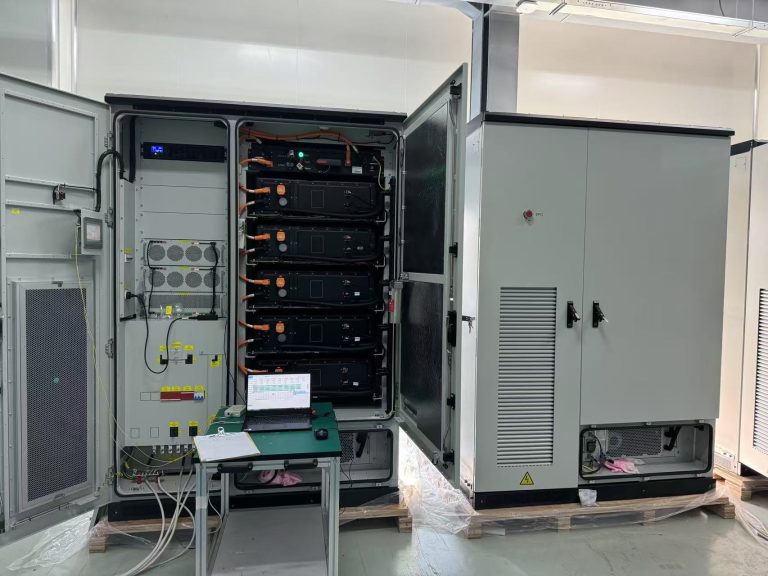
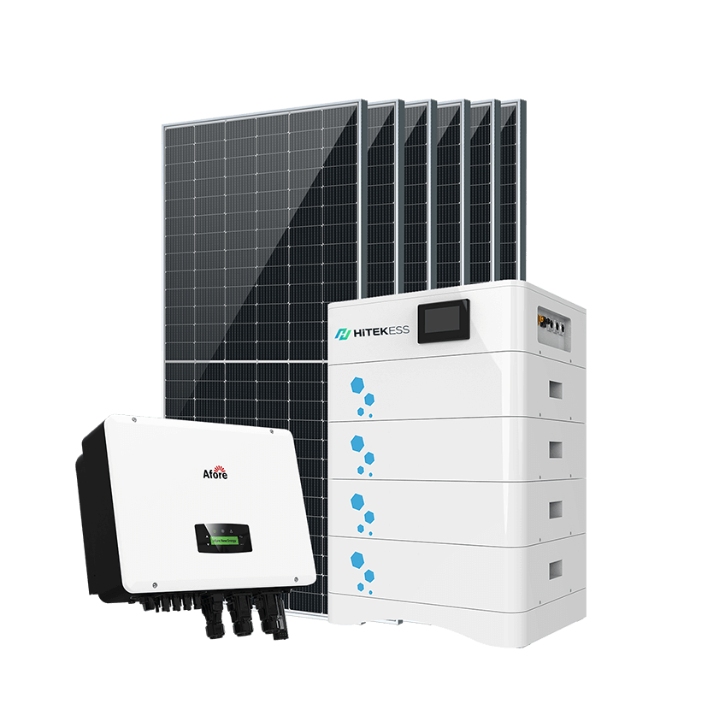
Hybrid solar systems connect PV, grid power, battery storage, and loads through smart energy control. The design should consider battery location, ventilation, cable distance, protection devices, monitoring, and expansion space. A clean solar plus storage layout is easier to explain, install, and service.
Ground mount arrays also pair well with commercial and industrial energy storage because land-based PV can be scaled in phases. A warehouse may begin with self-consumption, then add battery cabinets or a containerized BESS for peak shaving and backup power.
About HITEK ENERGY CO., LTD
HITEK ENERGY CO., LTD manufactures energy storage products, specializing in solar energy storage systems for residences, business, industry, and utilities. HITEK ENERGY produces efficient PV modules, hybrid inverters, lithium batteries, outdoor battery cabinet systems, container-based BESS, and entire solar storage systems.
For installers and project customers, this is relevant due to the requirement that components and engineering for ground mounted solar projects must be compatible. HITEK ENERGY provides customized solutions for solar and energy storage systems for use at homes, business, industries, remote locations, and energy projects.
Schlussfolgerung
Ground mount solar design works best when installers treat the land, structure, foundation, wiring, and storage plan as one system. Fixed-tilt racking may suit a farm or small commercial site. Tracking may fit a large open field. Driven piles, ground screws, concrete footings, and ballasted bases all have a place when matched to soil and load conditions.
For customers, a well-planned ground mounted solar system means better output, easier maintenance, and fewer surprises after commissioning. For installers, it means faster builds and stronger handover records.
Häufig gestellte Fragen
What is the best foundation for ground mounted solar panels?
There is no single best foundation for every site. Driven piles suit larger projects with steady soil. Ground screws fit many smaller or mixed-soil sites. Concrete footings add strength. Ballasted foundations work where digging is not allowed.
How far apart should ground mount solar rows be?
Row spacing depends on tilt angle, panel height, latitude, slope, and winter sun position. Installers should model shading before final layout and leave service space for cleaning, mowing, inspection, and repair.
Is fixed-tilt or tracking better for ground mount solar design?
Fixed-tilt is usually simpler, cheaper, and easier to maintain. Tracking can produce more energy on large open sites, but it brings higher cost and more moving parts.
HITEK ENERGY GROUND MOUNTING SOLAR SYSTEMS
- Hitek Hot Selling Roof Ground off Grid Solar Power System Complete 100kw 200kw 300kw Photovoltaic Panel Hybrid Solar Energy System
Model: HTCI-100KW/200KWH
- Hitek Expandable Top Selling 100kw 200kw on off Grid Hybrid Industrial Energy Storage Complete 3 Phase Solar Panel System 300kw on Ground
Model: HTCI-100KW/200KWH
- Hitek 250kw 500kw 500 Kw Ground Mounted Industrial Hybrid Solar Power System LiFePO4 Battery on off Grid Energy Storage Complete Solar Panel System Hybrid Kit
Modell: HT500KW-HY
- Hitek 500kw 1MW Hybrid off Grid Solar Energy Power System Storage Battery Farm Customized Solution Ground Mount Solar Power Plant System
Modell: HT500KW-HY
- Hitek 500kw Ground Mounted 200kw 500kw 800kw 1MW Hybrid off Grid Solar Power Energy Storage System Solar Array with 1mwh 2mwh Battery
Model: HT1MW-HY