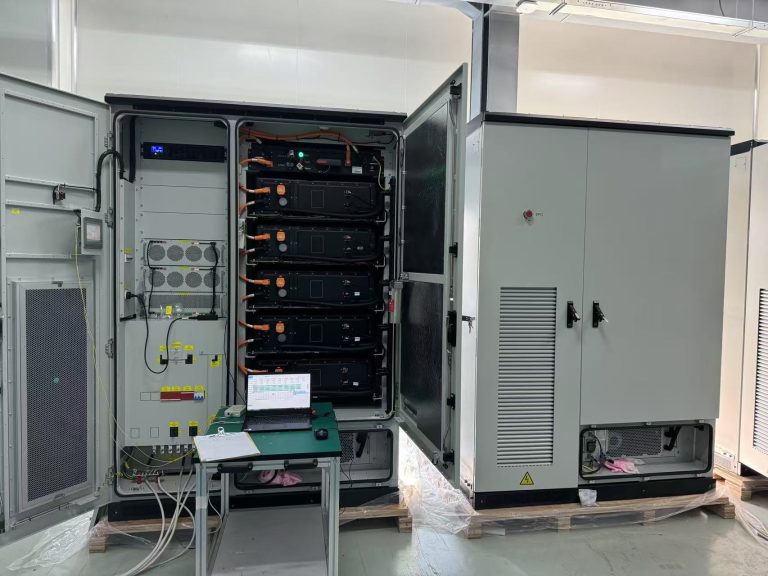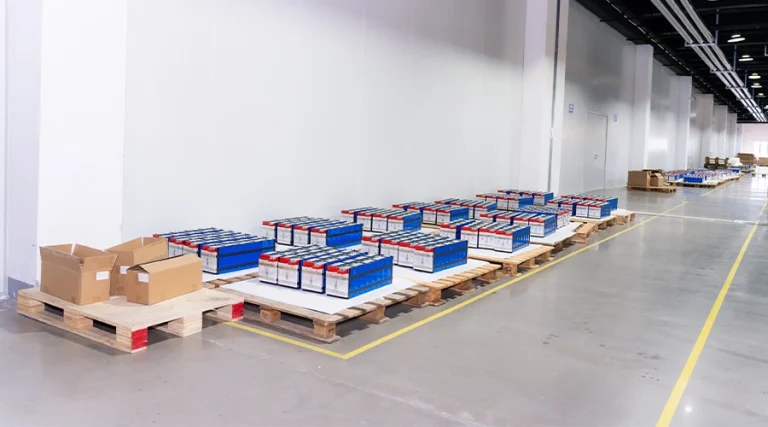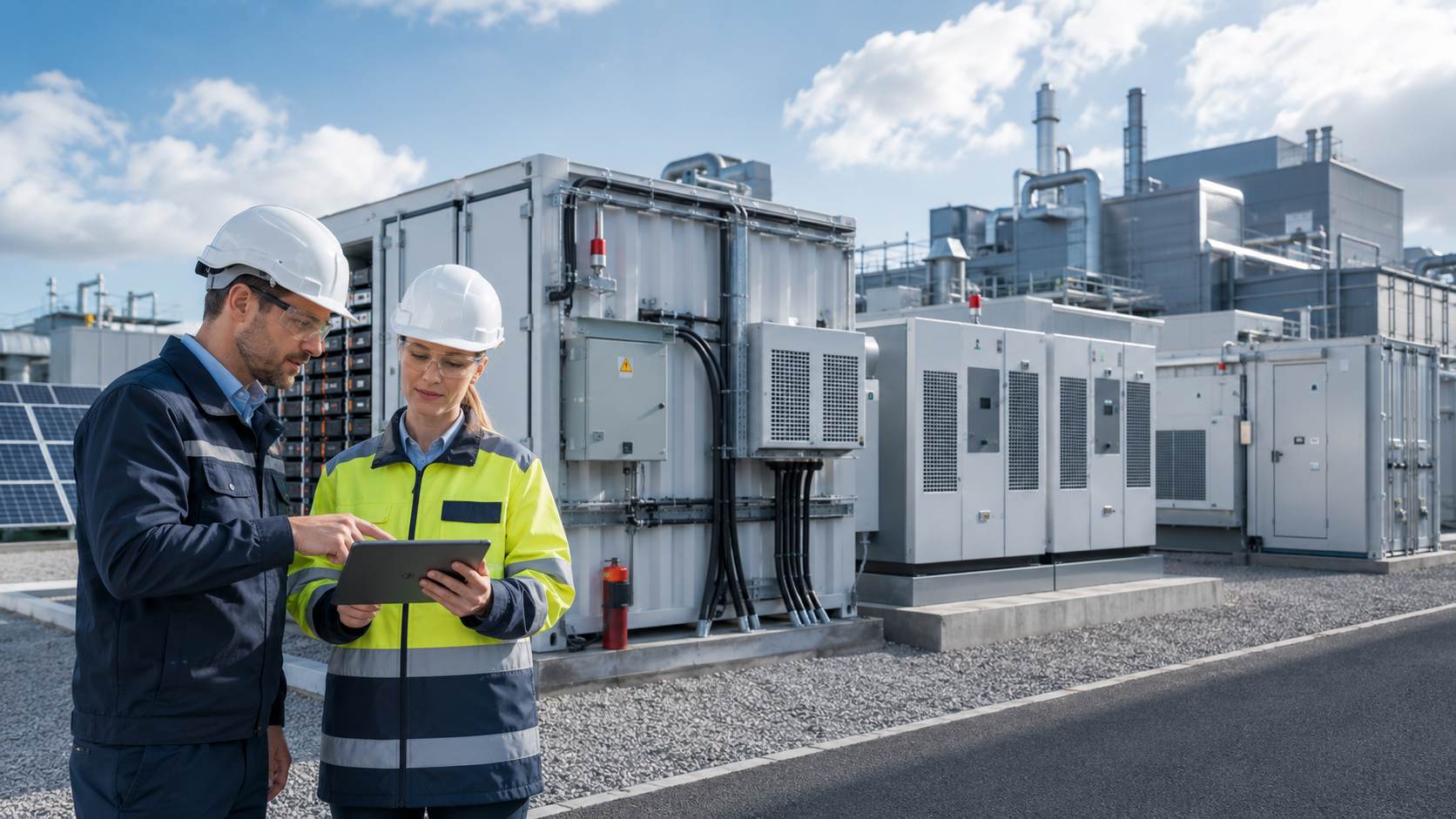
A commercial battery energy storage system can look simple on a quote sheet: battery capacity, converter power, delivery time, and price. A factory may need peak shaving without tripping production lines. An EV charging site may need fast response during short demand spikes. That is why a C&I BESS procurement checklist should be written before quotations are compared. A clear RFQ reduces hidden cost, puts suppliers on the same basis, and cuts surprises during approval, installation, and commissioning.
Why should a C&I BESS RFQ go beyond capacity and price?
Capacity matters, but it does not show how the system will behave on site. Two battery energy storage systems with similar rated capacity can have very different PCS response, BMS protection logic, cooling design, fire protection layout, and monitoring depth.
A serious battery storage RFQ starts with the business goal. Is the project built to cut demand charges, shift solar energy into evening use, keep production running during outages, or support a local microgrid? Each goal changes the specification. A plastics factory may care more about converter overload capacity. A cold storage warehouse may care more about reserved SOC and stable power for compressors.
What project use case should be defined first?
The use case is the first filter for every technical decision. A buyer should not ask only for a C&I energy storage system. The RFQ should describe the load profile, tariff structure, grid condition, solar input, backup target, and installation limits.
For peak shaving, ask the supplier to size the PCS against the highest 15-minute or 30-minute demand window. For load shifting, request usable capacity, round-trip efficiency, and daily cycling range. For backup power, define critical loads in kW, required runtime, restart sequence, and minimum reserve SOC. For a microgrid, ask for islanding logic, grid reconnection rules, generator coordination, and black start needs.
What battery and BMS details belong in the RFQ?
The battery and BMS section should be specific but easy for suppliers to answer clearly. The aim is to compare safety, service life, and operating limits side by side.
Which battery data should be requested?
Ask for battery chemistry, nominal capacity, usable capacity, voltage range, cycle life test condition, recommended depth of discharge, operating temperature range, cooling method, and degradation assumption.
Which BMS protections should be confirmed?
The BMS is the safety gatekeeper. Buyers should request protection at cell, module, rack, and system level where applicable. Important items include overvoltage, undervoltage, overcurrent, short circuit, temperature alarm, insulation monitoring, cell balancing, SOC calculation, SOH reporting, fault recording, and emergency stop.
The BMS should also communicate cleanly with the PCS and EMS. If the BMS reports an alarm but the PCS keeps discharging, the system is not coordinated.
What PCS requirements affect grid behavior?
The PCS is where stored DC energy becomes useful AC power. It also decides how the BESS reacts to the grid, loads, solar input, and generator signals. This is why a PCS specification checklist belongs in every C&I BESS RFQ.
Which PCS items change real operation?
Ask for rated power, AC voltage, frequency range, overload capacity, conversion efficiency, transformer requirement, harmonic limits, power factor range, response time, parallel operation, grid-following mode, grid-forming mode if required, and anti-islanding protection.
For sites with heavy motors, welding machines, pumps, elevators, or large HVAC equipment, short load swings can be harder than steady demand. The RFQ should ask whether the PCS can handle those swings without nuisance trips and limit grid feed-in when export is restricted.
What should the EMS control and report?
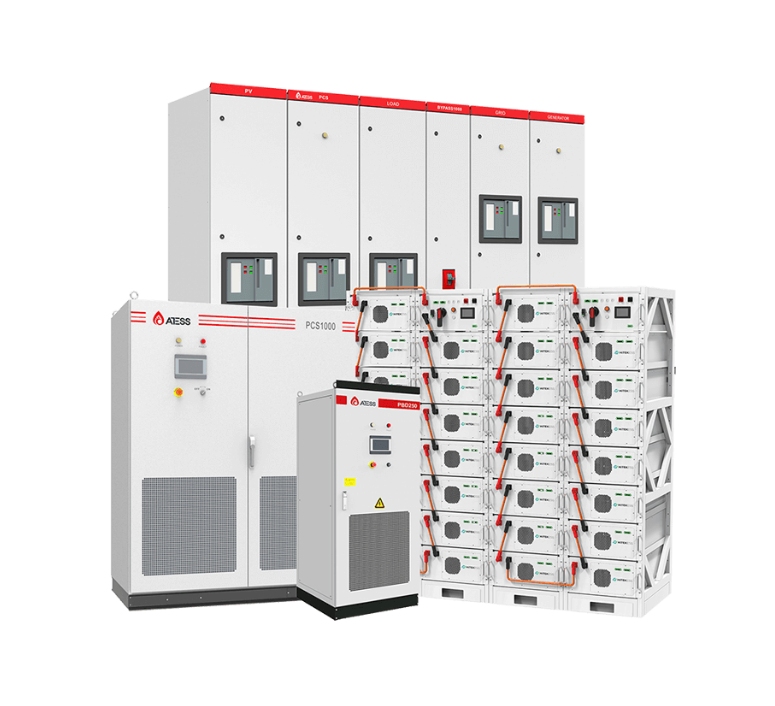
The EMS turns equipment into a working energy strategy. Without clear EMS requirements, stored energy may miss the financial goal.
The RFQ should ask for control modes such as time-of-use scheduling, peak shaving, solar self-consumption, backup reserve, generator charging, export limitation, and manual override. It should also request remote monitoring, data logging, alarm history, user access levels, and communication protocols such as Modbus, CAN, RS485, or Ethernet.
A practical EMS dashboard should show SOC, charge and discharge power, grid import and export, solar input, load demand, temperature, alarms, and daily energy flow. For a site manager, it should answer: Why did the battery discharge today? Is any alarm active?
What fire protection details should not be left vague?
Fire protection is often written too loosely. “With fire protection system” is not enough for a containerized BESS, an outdoor cabinet, or an indoor electrical room. The RFQ should ask what is detected, what is triggered, what is isolated, and what documents can be supplied for approval.
Key fire safety items include thermal runaway detection, smoke or gas detection, temperature monitoring, ventilation or exhaust design, fire suppression method, emergency stop, alarm output, HVAC fault response, spacing requirements, and maintenance access. Buyers should also ask which product tests, installation codes, and local authority requirements may apply.
Request a safety manual, fire protection diagram, battery test documents, electrical schematic, container layout, emergency response guide, maintenance guide, and commissioning checklist. For projects near buildings, fuel storage, or staff work areas, the supplier should help prepare documents for local approval.
How should on-grid and off-grid switching be written?
On/off-grid switching is a high-risk section of the RFQ because it affects real loads during grid failure. It should never be left as a general promise.
The RFQ should define whether the system needs automatic switching, manual switching, or both. It should state acceptable transfer time, critical load list, bypass cabinet function, generator connection, black start requirement, grid reconnection process, load priority, and protection against unplanned islanding.
For a commercial building, the goal may be to keep elevators, lighting, security, and IT equipment online. For a factory, the goal may be a controlled shutdown rather than full production backup. For a remote microgrid, the battery may need to stabilize solar input and reduce generator runtime. The switching logic must match the jobsite.
What documents help buyers compare suppliers fairly?
A clear document list makes quotations easier to compare and prevents a low quote from hiding missing engineering work.
| RFQ section | What to request from the supplier |
| Battery and BMS | Chemistry, usable capacity, protection logic, SOC and SOH reporting |
| 可生产性成本研究 | Rated power, grid mode, overload capacity, transformer need |
| EMS | Control modes, remote monitoring, data logs, communication protocols |
| Fire protection | Detection method, suppression design, safety documents |
| Switching | Bypass cabinet, generator input, transfer logic |
| Delivery support | Drawings, FAT report, SAT checklist, O&M manual, warranty terms |
The best RFQ documents are not the longest. They are the clearest. A buyer should be able to see which supplier has answered the technical risks and which supplier has only filled in a price.
How can buyers judge supplier capability beyond price?
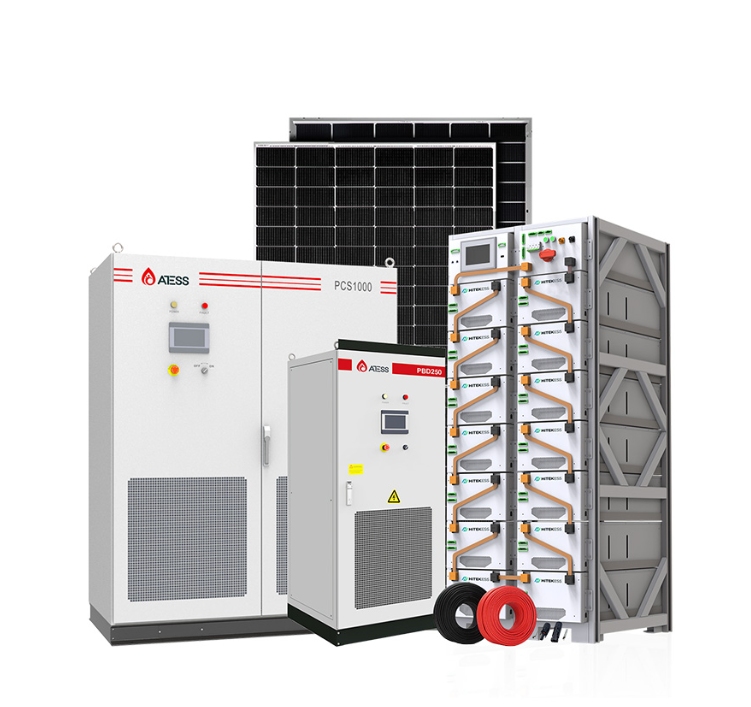
Price per kWh is useful, but it is not enough for commercial battery energy storage system procurement. Buyers should ask how the supplier handles system integration, quality control, documentation, testing, packing, shipment, installation guidance, and after-sales support.
A short buyer checklist can include:
- matched battery, BMS, PCS, EMS, and fire protection design
- control logic for the exact site use case
- factory test and site test documents
- remote support after commissioning
- warranty terms linked to real operating conditions
A low price becomes expensive when engineering gaps move to the jobsite.
What should buyers know about HITEK ENERGY CO.,LTD?
HITEK ENERGY CO., LTD. (en inglés) is an energy storage products manufacturer focused on prismatic LiFePO4 batteries, solar modules, and energy storage systems for commercial storage, residential storage, backup power, and grid-related applications. Its website presents a product range that includes C&I energy storage systems, containerized and outdoor BESS, lithium batteries, inverters, solar panels, and integrated solar storage solutions. For project buyers, the company can support customized energy storage system planning, technical service, product selection suggestions, installation guidance, maintenance advice, and after-sales communication. The high quality commercial & industrial energy storage solutions provided by HITEKESS can bring the cost savings, peak shaving, and back-up power to customers in commercial & industrial field and help them to use energy more efficiently. Before making your purchasing decision, you should compare the details such as specification, certificates, documents, price, delivery term and after sales service etc.
Conclusión
A good C&I BESS procurement checklist turns a vague quotation request into a buying tool. It helps buyers define the use case, compare BMS and PCS details, check EMS control logic, review fire protection, and confirm on/off-grid switching before delivery. The most useful RFQ describes real loads, grid limits, safety requirements, and service expectations. This approach can reduce rework, shorten technical discussions, and make supplier comparison more objective. For factories, commercial buildings, charging sites, and microgrids, the right RFQ is often the first step toward a safer and more bankable energy storage project.
Preguntas frecuentes
What should be included in a C&I BESS procurement checklist?
This document should outline Project specific Use case, BMS Protections, PCS Requirements, EMS Control Modes, Fire Protection Design and Switching Logic, along with list of Safety documents and detailed Commissioning steps and Warranty terms and Support.
Why are BMS, PCS, and EMS important in a commercial battery energy storage system?
BMS, PCS and EMS need to work together to protect the battery, to convert between battery power and AC power for loads, to control charge, discharge, backup reserve and export limits.
What fire protection information should be requested in a BESS RFQ?
Buyers should request detection method, suppression design, ventilation or exhaust plan, emergency stop logic, alarm interface, safety documents, maintenance access, and approval documents.
Can a C&I energy storage system switch between on-grid and off-grid modes?
Yes, but the RFQ must define transfer method, transfer time, bypass cabinet function, generator connection, critical loads, black start need, and reconnection rules.
HITEKESS TOP SELLING C& I BESS SOLAR ENERGY SYSTEMS
1. Hitek 500kw on off Grid Solar Energy System 350kw 400kw 600kw 800kw Hybrid Solar Photovoltaic Storage System High Voltage 3 Phase Solar Energy System
Modelo: HT500KW-HY
2. Hitek off Grid Solar Power System 60kw 100kw 120kw 200kw 250kw 300kw 400VAC Hybrid Bess Solar Battery Energy Storage System with 200kw 500kwh LiFePO4 Battery
Modelo: HTCI-100KW/200KWh
3. Hitek All in One off Grid 50kw 100kw 150kw 200kw 250kw 500kw Bess Solar Battery Energy Storage System 1MW Hybrid Solar System with Distributed Battery Cabinet
Modelo: HT-100/200-OC
4. 1 MW off Grid Ess All in One Commercial Lithium Battery Bess Container System AC/DC 250kwh, 500kwh, 1mwh, 2mwh Solar Energy Storage Battery Cabinet Outdoor IP54
Model: HT-500/2000-EC
5. Mali South Africa Ess Storage Solar Power Station 250kw 500kw 1MW Hitek off Grid Hybrid Commercial Solar Energy Systems Complete Set
Modelo: HT500KW-HY