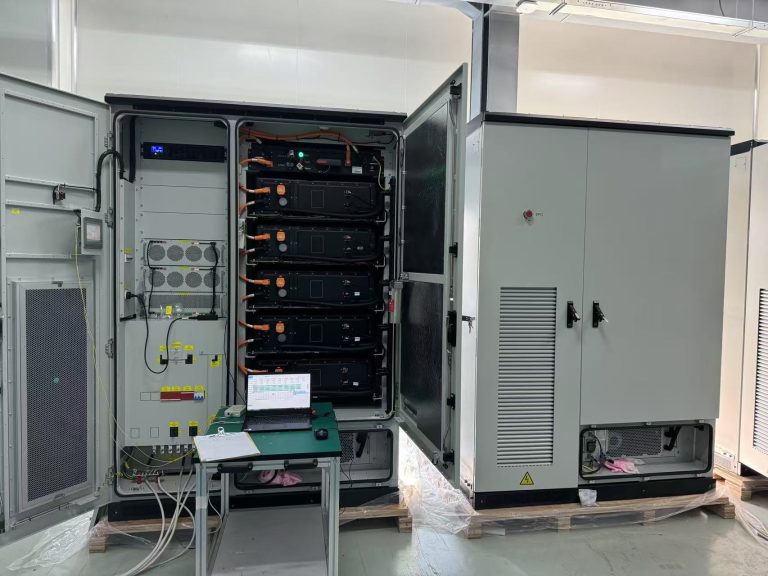
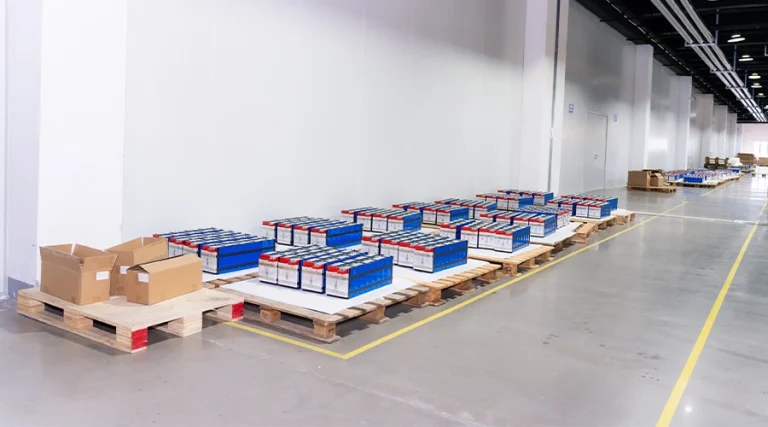
 Electricity has become a bigger business risk than many companies expected. Tariffs move faster, peak demand charges hit harder, and a short outage can stop production, spoil inventory, or knock a charging site offline. That is why C&I energy storage is no longer treated as a side project. In 2026, it is moving into the core of energy planning for factories, warehouses, telecom sites, EV charging hubs, office parks, and data-heavy facilities.
What matters now is not just battery capacity. Buyers are asking better questions. Can the system cut demand charges every month, not just during emergencies? Can it work with rooftop PV, a diesel genset, or a weak grid? Can it help a site stay online while also making the power bill less volatile? Those questions are shaping the market.
Why 2026 Feels Different for C&I Buyers
The commercial battery storage system market is entering a more practical phase. Businesses are no longer looking only for backup power. They are comparing payback, dispatch logic, cooling design, fire safety, and service response. At the same time, stronger behind-the-meter demand is showing up around data centers, telecom infrastructure, and solar-heavy business sites, while the wider storage market keeps expanding fast.
| What changed | Why it matters for buyers |
|---|---|
| Tariffs and demand charges are more painful | Peak shaving battery storage now has a clearer business case |
| Large loads are growing faster than grid upgrades | On-site storage helps bridge power quality and capacity gaps |
| Storage is pairing more often with solar and backup generation | Solar plus storage for business is becoming a standard design path |
| Procurement is more technical | EMS, safety architecture, and service matter as much as price |
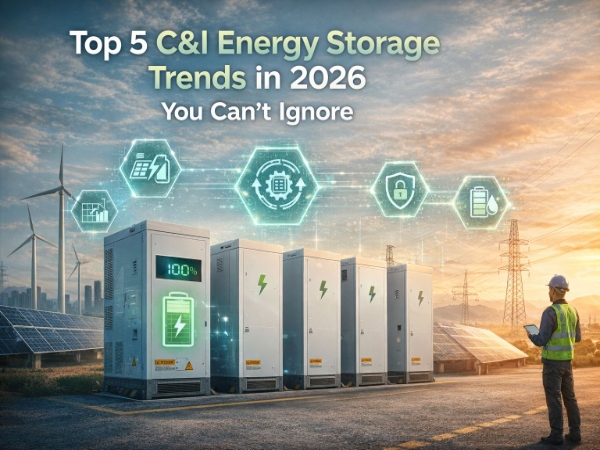
Top 5 C&I Energy Storage Trends in 2026
 The five trends below matter because they connect directly to project economics, site reliability, and purchase decisions.
1. C&I Storage Is Shifting From Backup Tool to Daily Operating Asset
A few years ago, many buyers looked at storage as insurance. It sat in the background and waited for an outage. In 2026, that view is changing fast. Industrial and commercial energy storage is being used every day for load shifting, demand charge reduction, and tariff arbitrage.
A cold-storage warehouse is a good example. Its load curve often spikes at predictable hours. A battery can charge when power is cheaper and discharge during the afternoon peak, trimming the monthly maximum demand that drives large parts of the bill. For a factory, that same logic supports battery backup for manufacturing while also cutting power costs. The project is no longer judged only by resilience. It is judged by how often it works for the balance sheet.
2. Solar Plus Storage for Business Is Becoming the Default Upgrade Path
Commercial solar battery storage is no longer limited to sites chasing green credentials. It is now a practical answer to midday overgeneration, evening load, and weak-grid conditions. As more businesses install PV, they run into a familiar problem: solar output and business demand rarely line up perfectly.
That mismatch is why solar plus storage for business is getting more attention. A warehouse with rooftop PV can store excess daytime generation and use it later when forklifts charge, cooling loads rise, or the tariff turns expensive. At more complex sites, microgrid battery storage is being paired with solar, grid supply, and standby generation. The result is a more stable system that can support self-consumption, smoother power quality, and better uptime.
3. EMS and Smart Dispatch Are Becoming Deciding Factors
In 2026, hardware alone does not win projects. The real value often sits in the energy management system for battery storage. Buyers want the battery to react to tariffs, site load, solar output, weather, and state of charge without constant manual intervention.
That is especially true for behind-the-meter battery storage in mixed-load environments. An EV charging site may need one dispatch strategy on weekdays, another on weekends, and a different one during high-price events. A telecom battery backup system has different priorities again, with uptime and power quality sitting above bill savings. The better the EMS, the more precisely the system can switch between savings mode, backup mode, and hybrid mode. In practice, smarter control is becoming one of the fastest ways to protect project returns.
4. Safety, Thermal Control, and Service Are Moving to the Front of the Conversation
As energy density rises, buyers are looking harder at cooling method, enclosure design, fire strategy, and long-term service. This is one reason the liquid cooled battery cabinet has become a popular talking point in larger C&I projects. Better thermal control can improve temperature consistency, support stable performance, and reduce stress on cells in demanding duty cycles.
The service side matters just as much. A battery project is not finished when the cabinet arrives on site. Commissioning, response time, remote diagnostics, spare parts, and operator guidance all affect lifetime value. For a food plant or a data center battery storage project, the cost of poor after-sales support can be much higher than the gap between two quotations. In 2026, buyers are getting stricter about that.
5. LFP Still Leads, but Chemistry Choice Is Starting to Broaden
For most C&I applications, LFP battery energy storage system designs remain the mainstream choice because they balance safety, cycle life, efficiency, and cost well for stationary use. Industry coverage also shows growing attention on sodium-ion, flow batteries, and other non-lithium options, especially where supply-chain diversity, cold-weather performance, or longer duration matter more than footprint.
That does not mean buyers should rush away from lithium. It means procurement is becoming more use-case specific. A battery storage for factories project with limited space may still favor compact LFP. A longer-duration site may keep watching flow technologies. A cost-sensitive stationary application may start asking when sodium-ion becomes bankable. The real trend is not one chemistry replacing all others. It is a wider decision set.
How Buyers Should Read These Trends
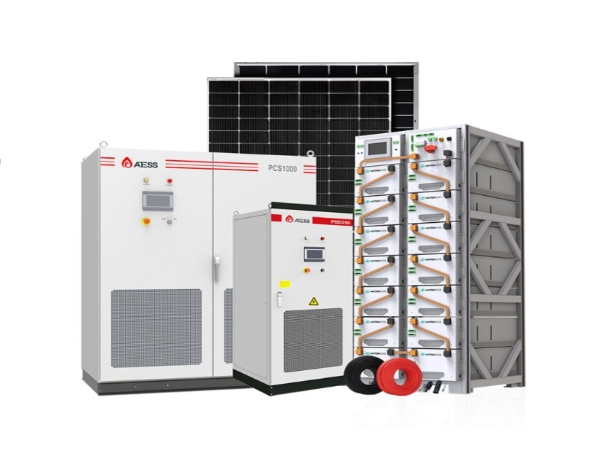 The market is getting bigger, but the best buying logic is getting narrower. The right commercial battery storage system depends on the site profile, not the loudest headline.
| If the site needs… | The buying question should be… |
|---|---|
| Lower bills | How much can the system cut peak demand each month? |
| Better solar usage | How much PV self-consumption can be recovered? |
| Reliable uptime | Which loads need backup, and for how long? |
| Fast expansion | Can the EMS handle EV charging, solar, and future load growth? |
| Lower operating risk | What are the cooling, fire protection, and after-sales arrangements? |
About HITEK ENERGY CO., LTD
For buyers looking at long-term industrial and commercial energy storage partners, HITEK ENERGY CO., LTD presents itself as a manufacturer focused on energy storage products, including prismatic LiFePO4 cells, modules, and systems for grid, commercial, residential, and backup applications. Its official website highlights two R&D centers, a CNAS-certified quality control center, automated and traceable production lines, customized C&I solutions, and service support that covers consulting, project evaluation, factory inspection, commissioning guidance, and after-sales response. The company also states that it serves customers across more than 120 countries and provides end-to-end solar storage solutions.
@ info/ rich
The biggest shift in 2026 is simple: C&I energy storage is no longer bought only for rare problems. It is being purchased for daily savings, cleaner solar use, better uptime, and more control over power risk. That changes how projects should be evaluated. Buyers that focus only on upfront price may miss the real drivers of value. Buyers that study dispatch strategy, safety design, service capability, and site-specific use cases are more likely to choose a system that performs well for years.
FAQs
What is C&I energy storage used for?
C&I energy storage is mainly used for peak shaving, load shifting, backup power, solar self-consumption, and power quality support. In practical terms, it helps businesses lower electricity costs and reduce the impact of outages.
Is a commercial battery storage system only for large factories?
No. A commercial battery storage system can also fit warehouses, retail parks, office buildings, telecom sites, hotels, farms, and EV charging stations. The key factor is the site’s load profile, tariff structure, and reliability requirement.
How does peak shaving battery storage save money?
Peak shaving battery storage charges during lower-cost periods and discharges when demand is high. This can reduce the site’s maximum grid draw, which helps cut demand charges and smooth monthly power costs.
Why is solar plus storage for business growing so quickly?
Solar plus storage for business solves a common mismatch between daytime solar generation and later electricity use. It helps companies use more of their own solar power, reduce grid dependence, and improve resilience at the same time.
What should buyers compare before choosing an industrial and commercial energy storage system?
The most important checks are cycle life, safety architecture, cooling method, EMS capability, warranty terms, service response, and how well the system matches the site’s real load and backup needs.
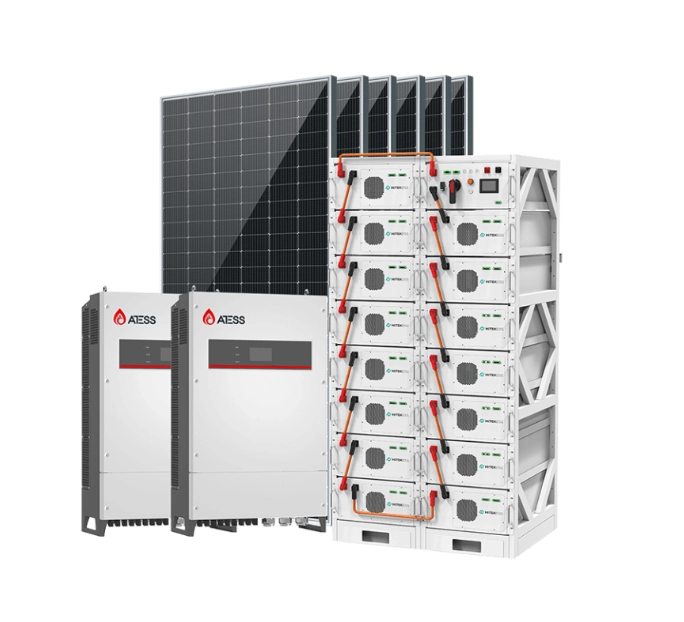
HITEKESS BEST SELLING C& I STORAGE SYSTEMS
1. Hitek 500kw on off Grid Solar Energy System 350kw 400kw 600kw 800kw Hybrid Solar Photovoltaic Storage System High Voltage 3 Phase Solar Energy System
Modell: HT500KW- HY
2. Hitek off Grid Solar Power System 60kw 100kw 120kw 200kw 250kw 300kw 400VAC Hybrid Bess Solar Battery Energy Storage System with 200kw 500kwh LiFePO4 Battery
Modell: HTCI- 100KW/200KWh
3. Renewable Energy Hitek Best 250kw Inverter off Grid on Grid Hybrid 50kw 100kw 150 Kw 250kw Complete Solar Power System Cost All in One Solar Panels System
Model: HT250KW-HY
4. Hitek All in One off Grid 50kw 100kw 150kw 200kw 250kw 500kw Bess Solar Battery Energy Storage System 1MW Hybrid Solar System with Distributed Battery Cabinet
Modell: HT-100/200-OC
5. South Africa Offgrid Hybrid Solar System150kw 120kw 100kw 50kw 30kw 50kwh 100kwh Solar Power System with LiFePO4 Battery Backup
Modell: HT50KW- HY