A solar inverter acts as a vital core within any photovoltaic system. It changes the DC electricity from solar panels into the AC power used by houses, firms, and energy storage systems. If a solar inverter stops without warning, reboots often, or displays alerts, it can cut down your energy yield. This also disrupts your daily power consumption.
Many users wonder why their solar inverter keeps turning off. Usually, this happens not because the hardware has failed completely, but because the unit is using its safety features. These built-in protections stop damage from happening when they detect odd voltage, high heat, heavy loads, battery issues, or wiring faults.
This guide looks at why a solar inverter might shut down. It offers a helpful solar inverter troubleshooting checklist to assist homeowners and technicians in finding the right fix.
Why Does a Solar Inverter Shut Down Automatically?
A solar inverter stays alert by checking the state of the whole solar power system. If it finds any risky conditions, it will pause its work. It does this through specific inverter protection shutdown protocols.
Common triggers for these safety stops include:
| Shutdown Cause | Typical Symptoms | Possible Solution |
| Superaquecimento | Fails during peak sun hours and restarts once cool | Boost airflow and block direct heat |
| Overload | Cuts out when several big machines start at once | Lighten the electrical demand |
| Low battery voltage | Stops when the stored energy is too low | Verify battery size and charge limits |
| Grid abnormality | Frequent resets in systems tied to the utility | Monitor grid voltage and frequency levels |
| PV input fault | Error codes or shaky power production | Check all cables and solar panel links |
Tracking the timing of these stops is the best way to start solar inverter troubleshooting. For instance, a unit that quits after running for hours might be too hot. On the other hand, an inverter that trips the moment you turn on a large tool is likely facing an overload.
7 Common Causes of Solar Inverter Shutdown and Solutions
Several factors can lead to a solar inverter repeatedly shutting down. These issues appear often in home, business, and off-grid solar setups.
1. Solar Inverter Overheating Problem
High temperature is a top reason for unexpected shutdowns. Solar inverters produce heat while they work. If the air around them is still, or if they sit in the sun, they can get too hot. Blocked vents or thick dust also make this worse, pushing internal heat past safe points.
Signs of an inverter overheating problem include:
- Powering down during the hottest hours
- Output dropping right before it stops
- Displaying heat-related alerts
- Turning back on by itself after cooling
Solutions:
- Mount the unit in a cool, breezy spot
- Leave enough empty space around the casing
- Clean dust out of the cooling vents regularly
- Keep it away from other machines that get hot
Picking a good spot for installation is key to making the inverter last longer and stay reliable.
2. Grid Voltage or Frequency Problems
In systems tied to the local utility, shaky power from the street can cause a shutdown. Solar inverters must follow strict safety rules. If the grid voltage or frequency drifts too far, the inverter will disconnect. This protects the equipment from damage.
Common issues include:
- High grid voltage when local power use is low
- Voltage spikes or drops in rural areas
- Short power cuts from the utility company
- Setting the wrong grid region in the software
Troubleshooting steps:
- Look at the screen for grid-specific error codes.
- Check your data logs to see when the stops happen.
- See if neighbors are having similar power flickers.
- Talk to your power company or installer if the grid stays unstable.
3. Low Battery Voltage in Hybrid Solar Systems
For setups with storage, low battery voltage is a frequent culprit. A hybrid inverter needs a steady flow from the battery. If the energy level drops too far, the unit shuts down. This prevents the battery from draining to a point where it might break.
Possible causes include:
- The battery is too small for the house’s needs
- Too many cloudy days with little sun
- Wrong settings for when to charge
- Old battery cells losing their strength
- Heavy power use throughout the night
Using a lithium solar battery system can help. These units offer high energy density and last through many more cycles. They charge quickly and efficiently. Because of this, lithium solar batteries are now the standard for home and business storage.
4. Overload or Excessive Power Demand
Every inverter has a set limit on how much it can output. If the tools and lights you turn on ask for more than that limit, the safety switch trips.
High-demand appliances often include:
- Central air conditioning units
- Deep well water pumps
- Large kitchen refrigerators
- Space heaters or water heaters
- Heavy-duty shop motors
Example: You might try to run the AC, the washer, and a heater all at once. Even if they work fine alone, their total draw might be too much for the inverter to handle.
Solutions:
- Turn off things you do not need
- Check the “surge” or starting power of your tools
- Pick an inverter with more capacity if your needs grow
5. PV Input Problems and Solar Panel Connection Faults
Sometimes the fault lies with the panels rather than the inverter. Issues on the roof can trigger a safety stop.
Areas for PV inverter troubleshooting include:
- Loose or vibrating DC connectors
- Solar cables damaged by weather or pests
- Incorrect wiring during the initial setup
- Moisture causing insulation leaks
- Voltage levels that are too high or too low for the unit
Installers should check:
| Inspection Item | What to Check |
| DC cables | Look for wear, cracks, or loose ends |
| PV voltage | Ensure the sun is providing the right range |
| Conectores | Look for burn marks or poor fits |
| Solar strings | Confirm all rows of panels are performing equally |
A thorough solar inverter fault finding mission must cover both the rooftop DC side and the house AC side.
6. Incorrect Inverter Settings
Bad programming can lead to constant restarts. This happens most often after a system is updated or when new parts are added.
Common setup errors:
- Choosing the wrong battery type in the menu
- Setting the charge voltage too high or low
- Setting the cut-off voltage at the wrong level
- Using the wrong mode for your specific grid type
Always verify the battery manual before you tweak the software. Matching the inverter to the battery specs is vital for stability.
7. Communication Errors and Software Issues
Modern solar setups use smart platforms to give you data. If the “brain” of the system cannot talk to the parts, it might stop as a precaution.
Communication faults include:
- Dropping the WiFi or internet signal
- Bugs in the mobile monitoring app
- Outdated firmware that needs a patch
- Wrong addresses set for the battery or meter
Keep in mind that a lost WiFi signal does not always mean the power has stopped. Check the physical lights on the unit to see if it is still working.
Solar Inverter Troubleshooting Checklist
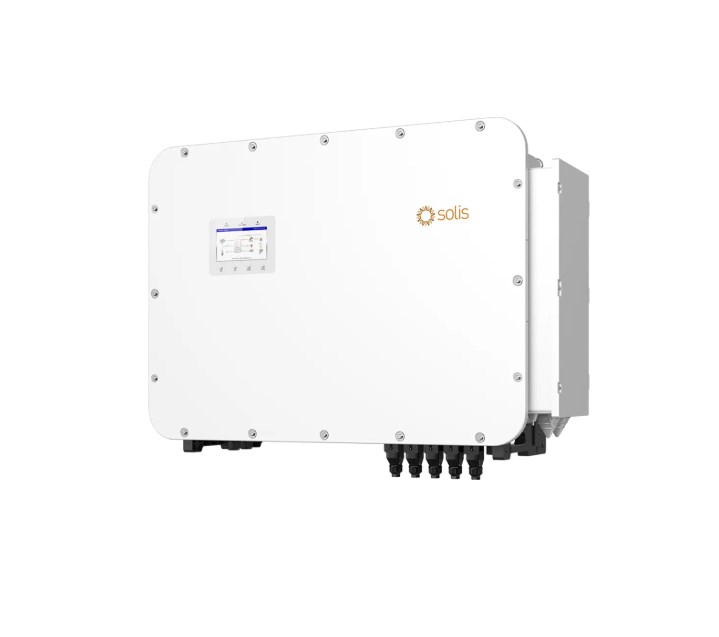
If your system keeps cutting out, use this quick list to find the issue:
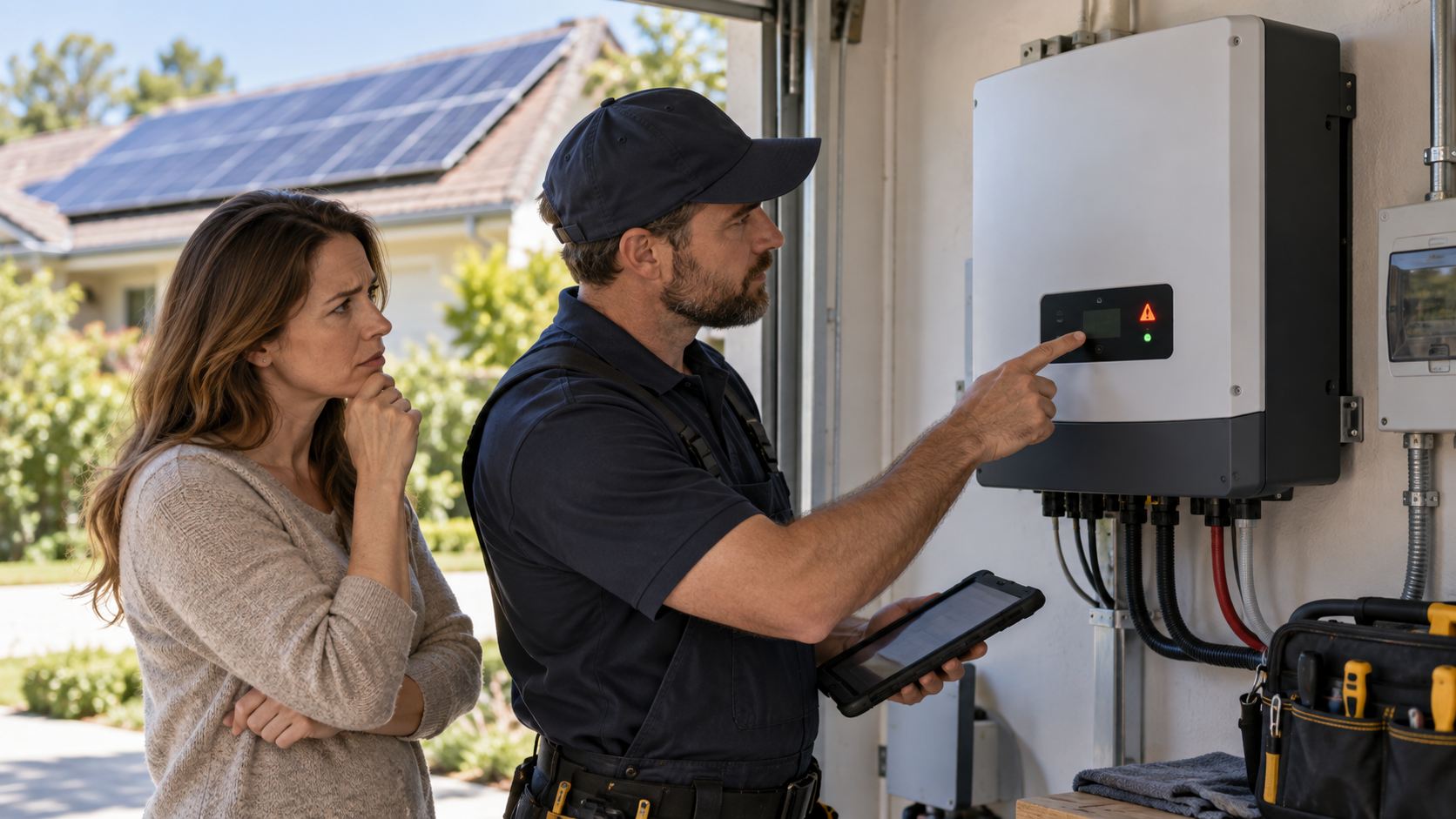
Step 1: Check the Error Message
Write down:
- The specific error code on the screen
- Which lights are flashing (red, orange, or green)
- The exact time the power went out
- What the weather was like (hot, rainy, or cloudy)
- What big appliances were running at the time
These codes usually point directly to the source, like a battery dip or a heat spike.
Step 2: Check Basic Connections
Look at:
- The AC breaker in your main panel
- The DC disconnect switch near the inverter
- The plugs on the battery terminals
- The physical state of all visible wires
- The data cables connecting the system components
Step 3: Check Operating Conditions
Think about the timing:
- Does it only fail when the sun is at its peak?
- Does it trip when the pump or AC kicks in?
- Is the problem only happening after dark?
- Does the system fix itself after a few minutes?
The “when” and “how” usually tell you the “why.”
How to Fix Solar Inverter Shutdown Problems?
The best fix depends on the root cause found during your check.
| Problema | Recommended Action |
| Temperature issue | Add fans or move the unit to a cooler spot |
| Battery problem | Update the settings or check the cell health |
| Grid issue | Wait for the utility to stabilize or call an expert |
| Overload | Turn off heavy machines or get a bigger inverter |
| Cable fault | Fix any broken wires or tight connectors |
Do not just keep hitting the reset button. Frequent reboots without a real fix can hide deeper issues and lead to bigger repairs later.
When Should You Contact a Solar Installer?
Homeowners can do basic checks, but you should call a pro if:
- The same fault code keeps appearing after a reset
- You need to open panels to check high-voltage wiring
- You smell burning or see scorched parts
- The system stays dead even after you follow the manual
HITEK ENERGY offers expert support and service to keep your solar power running smoothly. You can find more details on how to get help by visiting the company’s service page.
About HITEK ENERGY CO.,LTD
HITEK ENERGY CO.,LTD is a leading manufacturer of energy storage products. We focus on creating dependable solutions for the modern renewable energy market. The company builds energy storage systems for homes, businesses, and off-grid sites where steady power is a necessity.
With deep knowledge in battery storage technology, HITEKESS helps clients with all-in-one products and custom technical support. Our goal is to help users gain energy independence through reliable and efficient power systems. Our products are built to last and perform in various environments.
Discover our full range of energy solutions by visiting the HITEKESS products page e solution page.
Conclusão
A solar inverter shutdown is often a sign that the system is protecting itself. It does not always mean you have a broken machine. Many times, the cause is just high heat, a low battery, a heavy load, or grid fluctuations.
By using a clear solar inverter troubleshooting plan, you can find the fault quickly. This reduces downtime and keeps your energy bills low. Regular maintenance and choosing high-quality energy storage equipment are the best ways to avoid these headaches.
For the best results, work with a trusted energy storage manufacturer. Their technical teams can provide the guidance needed to keep your system stable for years to come.
FAQs About Solar Inverter Shutdown
1. Why does my solar inverter keep shutting down?
Most often, it is due to overheating, too much power demand, low battery levels, or grid instability. Safety settings also trigger stops to prevent damage.
2. How do I reset a solar inverter?
Check your manual first. Generally, you turn off the AC and DC switches, wait for a minute, and then turn them back on in the correct order.
3. Why does my inverter stop working during the day?
Daytime stops are usually caused by high temperatures or issues with the solar panels. Sometimes, the grid voltage gets too high when the sun is brightest.
4. What are common solar inverter error codes?
These codes vary by brand but usually cover heat, overload, battery low, or insulation faults. Your user guide will explain what each specific code means.
5. How can I prevent future solar inverter shutdown problems?
Keep the area clean and cool. Do not overload the system with too many appliances. Finally, ensure your battery is well-maintained and your system is installed by a professional.
HITEKESS BEST SELLING SOLAR INVERTERS
- Hitek 120/240V Split Phase Us Voltage Home Storage Hybrid Solar Inverter 10kw 15kw 20kw Hitek Energy off Grid Inverter
Model: HT-IN10KW-US
- Deye Single Phase 220V 230V 5kw 6kw 8kw Solar Hybrid Power Inverter for Home Use Ready for Delivery
Modelo: SUN-6K-SG03LP1-UE
- Deye 3phase 8kw 10kw 12kw Hybrid Solar Inverter 380VAC 10000W on off Grid Inverter with Low Voltage Battery
Model: DEYE-SUN-10K-SG02LP1-EU-AM3
- Hitek 120/240V Split Phase Us Voltage Home Storage Hybrid Solar Inverter 10kw 15kw 20kw Hitek Energy off Grid Inverter
Model: HT-IN10KW-US
- Deye Solar Inverter Hybrid 48V Battery 8kw 10kw 12kw 15kw Inverter Home Inverter Solar Energy Storage Three Phase Hybrid on Grid off Grid with Battery
Modelo: SUN-10K-SG04LP3-UE