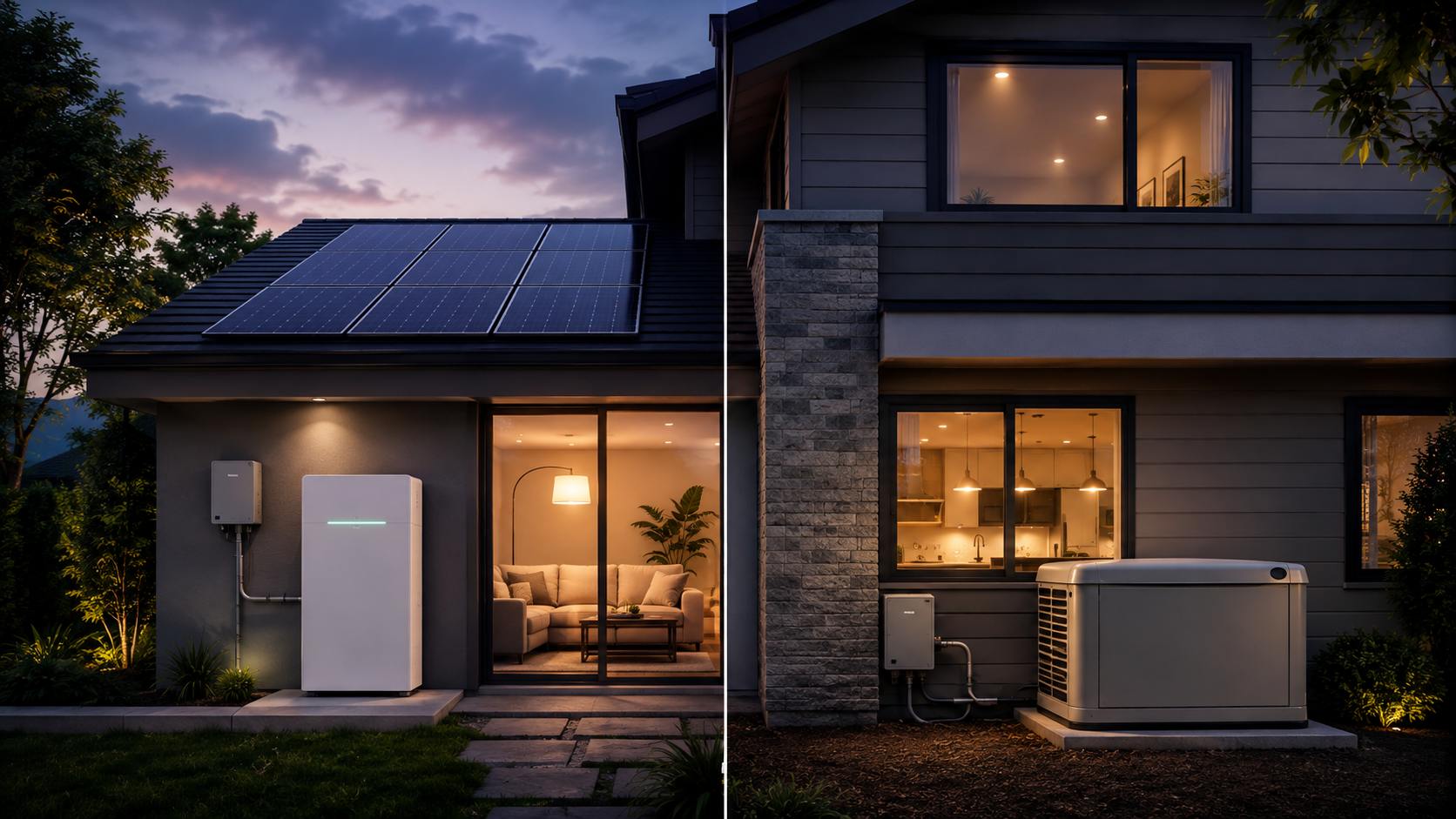
In less than a minute, the power outage transforms the house. No more cooling from the fridge, no Wi-Fi anymore, the house goes dark, and there may be troubles with pumps and gates. Up to now, the only answer to this problem was the generator. But now, there is another way – battery storage in the house.
But what is better, the generator or the battery storage system? In the case of battery storage, it will work quietly and automatically. On the other hand, in some circumstances, a generator is more suitable for a long outage and heavy loads. Everything is up to the home characteristics and the budget.
What Is a Residential Energy Storage System?
Residential energy storage systems store electrical energy in the battery and release it whenever the house demands electricity. This could be done through the roof solar, utility, or both. The most common home energy storage system includes a lithium battery, battery management system, inverter, and energy control systems.
How Home Battery Backup Works During an Outage
Whenever there is a failure on the grid side, the properly installed home battery backup will automatically separate itself from the grid and feed power to selected circuits or even the entire house when possible. Common critical loads include:
- refrigerators and freezers;
- Wi-Fi, computers, and security systems;
- lighting and phone charging;
- water or circulation pumps;
- selected kitchen or cooling loads.
Runtime depends on usable battery capacity and actual load. A 10 kWh battery serving an average 1 kW load has a simple theoretical runtime of about 10 hours before conversion losses and reserve settings. At 2 kW, that time is roughly halved. Backup planning should therefore begin with energy use, not battery size alone.
How Does a Traditional Generator Provide Backup Power?
A traditional generator creates electricity by running an engine on gasoline, diesel, propane, or natural gas. Portable units are commonly started manually, while standby systems can start automatically after a grid failure.
Where Generators Still Make Sense
A generator may be the stronger option when outages regularly last several days and solar charging is uncertain. It can also suit properties that must run large pumps, heating equipment, workshop loads, or several high-power appliances for long periods.
Residential Energy Storage System vs Generator: Key Differences
Both systems can keep a home running when utility power disappears, but they solve the problem differently. The practical differences are easy to see.
| Фактор | Житлова система зберігання енергії | Traditional Generator |
| Energy source | Stored solar or grid electricity | Fuel |
| Outage response | Fast and often automatic | Manual or automatic |
| Шум | Very low | Engine noise |
| On-site emissions | None during discharge | Exhaust while running |
| Routine maintenance | Generally limited | Regular engine service |
| Daily value | Solar use and time shifting | Mainly backup |
| Runtime | Limited by stored energy | Limited mainly by fuel |
| Solar integration | Direct fit | Separate setup needed |
Reliability and Response Time
For short blackouts, a solar battery backup system is convenient. There is no need to bring out a portable machine, add fuel, or wait for an engine to start. A correctly designed system can move critical loads to battery power quickly, helping refrigerators, networking equipment, lighting, and security systems stay available.
A generator offers another kind of reliability. During a prolonged outage, stored battery energy eventually runs down. A fuel generator can keep operating if fuel remains available and the equipment is working. Where outages last for days rather than hours, that difference matters.
Cost: Look Beyond the Purchase Price
Generator equipment can cost less upfront than a whole-home battery storage system, but purchase price is only part of the picture. Fuel, servicing, oil, filters, repairs, and installation can add costs over time.
A home energy storage system usually needs more capital at the start. In return, it can work outside emergencies. When paired with solar panels, stored daytime electricity can be used in the evening. In areas with time-of-use rates, a battery can also reduce grid use during expensive periods.
Noise, Maintenance, and Daily Convenience
A generator contains an engine with moving parts and needs periodic checks. Fuel quality or supply can become a concern when the unit sits unused for months. Because combustion creates exhaust gases, proper outdoor installation is essential.
Lithium battery energy storage has no combustion engine. For homeowners who want quiet backup at night, low routine maintenance, and automatic operation, this difference is significant.
Energy Independence and Solar Use
A residential solar storage system can become part of the home’s normal energy cycle. Consider a house with rooftop solar producing more electricity than the occupants need at noon. With a hybrid solar system with battery storage, part of that surplus can charge the battery. Stored power can then cover evening loads or remain available as emergency backup power for the home.
Which Backup Power Solution Fits Different Homes?
There is no universal winner. The best backup power solution for a home depends on outage length, critical circuits, local electricity pricing, solar potential, and tolerance for maintenance and noise.
A home battery backup system is often a good fit when:
- outages usually last minutes or hours;
- quiet operation matters;
- rooftop solar is installed or planned;
- daily energy management is also a goal;
- fuel storage and engine maintenance are undesirable.
A generator can remain practical when multi-day outages are common, continuous high loads are unavoidable, or battery recharging would be difficult.
What to Check Before Choosing a Home Power Backup System
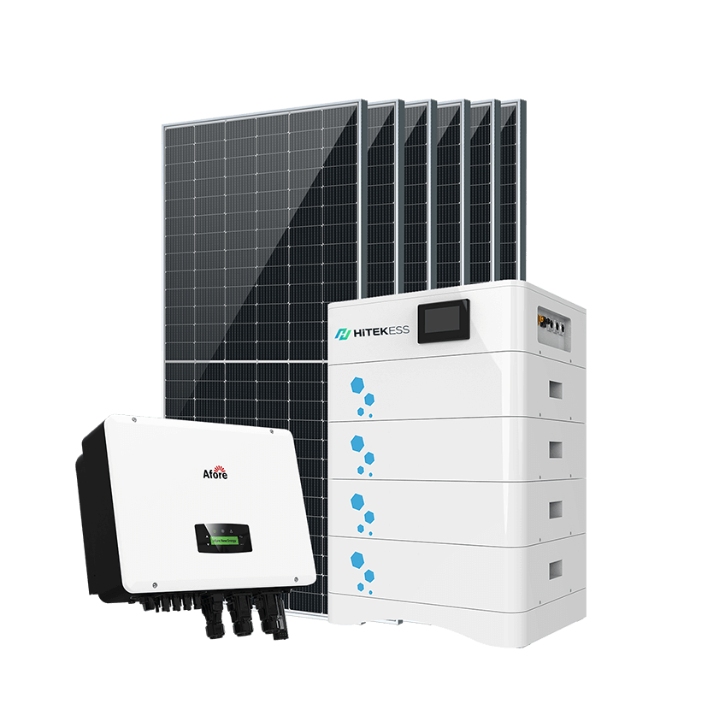
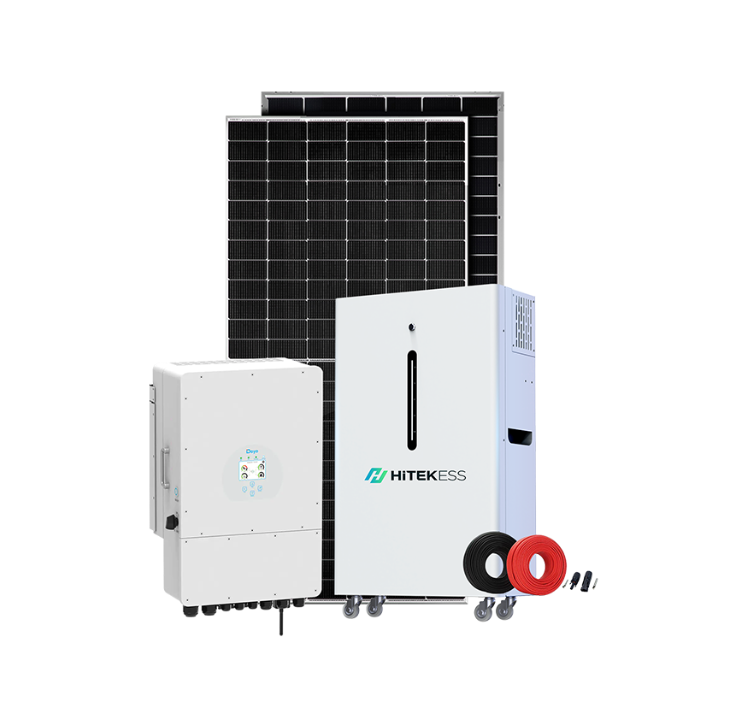
Img.20KW 40KWH Hybrid Home Solar System.webp
System sizing should start with a load list. A refrigerator and router have very different requirements from central air conditioning, an electric water heater, or a large well pump.
Calculate Critical Loads First
List the appliances that must run during an outage, then note running wattage, expected hours of use, and startup surge. This gives a realistic basis for battery capacity and inverter power.
Next, decide how much backup time is needed. Six hours of essential loads requires a very different system from two days of whole-home operation. Oversizing adds cost; undersizing can leave important circuits without enough stored energy.
Про HITEK ENERGY CO., LTD.
Компанія HITEK ENERGY CO., LTD. is an energy storage products manufacturer serving residential, commercial, and broader energy-storage applications. Its product scope includes lithium battery systems, residential energy storage systems, inverters, solar-related equipment, and integrated storage solutions. HITEKESS also provides project consultation and technical support for customers selecting and deploying energy systems.
For buyers comparing a generator alternative for the home, working with an energy storage manufacturer can help when battery capacity, inverter output, solar input, backup loads, and future expansion must be matched to one project rather than treated as separate parts.
Висновок
A conventional generator still works well for situations where long running time and constant maximum power production take priority over noise, fuel consumption, and maintenance. For most homes, the better choice for backup power would be a home energy storage unit since it will allow you to have silent blackout protection at the same time enabling solar power consumption.
Часто задані питання
Is a residential energy storage system better than a generator?
It can be better for homes that want quiet automatic backup, low routine maintenance, solar integration, and useful energy storage outside blackouts. A generator may be better for very long outages when fuel is readily available.
How long does a home battery backup system last during a power outage?
Backup time depends on usable battery capacity and household load. A 10 kWh usable battery supporting a steady 1 kW load has a theoretical runtime near 10 hours before losses and reserve settings. Lower loads extend backup time.
Can solar batteries replace generators?
Yes, solar batteries can replace generators in many residential situations, especially when outages are relatively short and the battery can recharge from solar panels. Homes facing multi-day outages with poor solar conditions may need more storage capacity or another backup source.
Is a lithium battery energy storage system suitable for whole-home backup?
It can be, provided the battery bank and inverter are sized for the home’s actual demand. Whole-home backup may require much more capacity than essential-load backup, especially where cooling, heating, pumps, or other high-power appliances run together.
HITEKESS Residential Solar Power System On HOT-SALE
- Проста установка Добра продуктивність 5 кВт 10 кВт 15 кВт 20 кВт Offgrid Сонячна система 220V 380V 30 кВт Гібридна сонячна система Домашнє використання Повний комплект
Модель: HT10KW-HY
- Висока ефективність 15 кВт 20 кВт 30 кВт на відключенні мережі 30 кВт Сонячна система Домашня енергія з літій-іонними батареями
Модель: HT10KW-HY
- Hitek Hote Sale Mali 1kw 2kw 3kw 5 Kw 5000W Home Solar Panel Kit 10kw off on Grid Solar Power System Cost 10kw 10000W for Roof
Модель: HT10KW-OFF
- Hitek Energy Turnkey Complete Set 380V 400VAC off Grid Solar Panel Backup System 30kw Hybrid 40kVA 30 Kw Rooftop Home Solar Power System 30000W 30kVA 20 Kw
Модель: HT30KW-HY
- Hitek від мережі сонячної системи Електрична стіна 10 кВт Домашня літієва батарея Сонячне зберігання 10 кВт Фотоелектрична сонячна панель 10 кВт Система 20 кВт
Модель: HT10KW-OFF