A solar battery does not work at full capacity for years and then suddenly stop. Its storage capacity fades gradually. In many modern solar energy storage systems, a well-designed lithium battery can serve for roughly 10 to 15 years, although actual life depends on battery chemistry, daily cycling, depth of discharge, temperature, charging conditions, and system control.
That makes “how long does a solar battery last?” more than a question about years. Buyers should also look at solar battery cycle life, usable capacity, operating conditions, and the point at which remaining capacity no longer meets the site’s needs. For homes, factories, farms, telecom sites, and commercial buildings, those details affect replacement cost and long-term system value.
How Long Does a Solar Battery Last in Real Use?
Solar battery lifespan varies by chemistry and workload. A battery used once each evening in a home has a different duty cycle from one used for commercial peak shaving several times a day.
| Battery type | Typical service-life pattern | Common solar use |
| Lead-acid | Shorter life, more sensitive to deep discharge | Small backup and low-cost off-grid systems |
| Lithium-ion | Longer life and higher usable capacity | Residential and commercial storage |
| ЛіфеPO4 | Long cycle life and strong thermal stability | Home, C&I, backup and renewable energy storage |
For buyers asking how long do lithium solar batteries last, 10 to 15 years is a useful planning range, not a fixed promise. A battery may remain usable beyond that point, but it will normally store less energy than when new.
What Factors Affect Lithium Battery Lifespan?
The main factors affecting lithium battery lifespan are connected. Chemistry sets the starting point, while daily operation determines how quickly the battery ages.
Battery Chemistry
LiFePO4 battery lifespan is one reason lithium iron phosphate chemistry is widely used in stationary storage. It handles repeated charging well, has strong thermal stability, and suits applications where long service life matters more than maximum energy density.
That fits a solar energy storage battery that may charge from PV almost every day and discharge after sunset or during peak-rate periods.
Battery Cycle Life and Depth of Discharge
Battery cycle life describes how many charge-discharge cycles a battery can complete before usable capacity falls to a defined level. One full cycle is roughly equal to using 100% of rated capacity, even if that use happens across several partial discharges.
Depth of discharge matters too. A 10 kWh battery that regularly delivers 8 kWh is operating at about 80% depth of discharge. Repeated very deep discharge generally adds more stress than moderate cycling.
So when comparing solar battery cycle life, do not ask only “how many cycles does a solar battery last?” Also check the depth of discharge, temperature, and end-of-life capacity used for that rating.
Робоча температура
Heat speeds up battery aging. Very low temperatures can reduce available power and create charging limits. A battery beside hot industrial equipment or inside an unventilated enclosure faces different conditions from one installed in a controlled equipment room.
Solar battery operating temperature should therefore be part of system design. Thermal management, airflow, enclosure design, and installation location all influence long-term performance.
Charge Rate and Daily Use
High charge or discharge rates create more internal heat and electrical stress. A small business using storage for evening loads may complete one moderate cycle per day. A factory using storage for peak shaving, backup, and tariff shifting may cycle more often.
The second site can gain more daily value from storage, but its commercial solar battery lifespan depends heavily on correct sizing and sensible operating headroom.
Battery Management System
A battery management system for solar battery applications monitors voltage, current, temperature, state of charge, and cell balance. It can limit operation when conditions move outside safe ranges.
A good BMS cannot stop aging. It can prevent avoidable stress from overcharge, excessive discharge, cell imbalance, and unsafe temperatures, making it central to long-term lithium battery lifespan.
Calendar Life vs. Cycle Life
Cycle life measures use. Calendar life measures aging with time, even when a battery is not cycling heavily.
A battery at a telecom site may spend long periods on standby, while a home solar battery may charge and discharge every day. The first can be influenced more by calendar aging; the second may see more cycling-related wear. A realistic home solar battery lifespan estimate should consider both.
What Does Solar Battery Degradation Look Like?
Solar battery degradation is usually gradual. A home battery may begin reaching its reserve level earlier than it did when new. In a commercial site, storage may no longer cover the full peak-demand window.
Common warning signs include:
- usable capacity falling faster than expected;
- growing differences between cell voltages;
- more frequent temperature or protection events;
- reduced ability to support the planned backup load.
These signs do not always mean immediate replacement. They do mean remaining capacity should be compared with the actual load profile.
How to Extend Solar Battery Life
The key to increasing solar battery lifespan is in conditions and system design, not in any maintenance hacks.
Make sure the battery is working under the right temperature conditions. Do not expose the battery to hot, humid, dusty, or poorly ventilated areas. Also, do not overcharge and make sure the charging parameters comply with the battery chemistry and inverter.
Sizing is also important. A small battery will run through a high depth of discharge every day; a big system will bring in extra costs. Make sure the battery capacity, інвертор capacity, PV output, backup needs, and hourly loads match each other.
The monitoring of the state of charge, temperature, alarms, cycles, and capacity may help find possible issues even before they cause lost runtime or unexpected downtime.
How to Choose a Long-Life Solar Battery
It should not be assumed that the solar battery with the highest cycle numbers on its spec sheet is the best solar battery available. Potential buyers should evaluate the conditions under which the number was achieved and the intended application.
When choosing a residential battery solution, one should look at usable capacity, requirements for backup, space available for installation, and daily cycling. When evaluating a commercial or industrial solar battery, special emphasis should be placed on the following parameters: continuous power, peak load, thermal management, communication, remote monitoring capabilities, maintenance and expandability.
Also, a long-life solar battery solution should have technical documentation, compatible control systems, good manufacture, and after sales support – all these are important factors for a piece of equipment expected to work through many cycles.
About HITEK ENERGY CO., LTD
Компанія HITEK ENERGY CO., LTD. manufactures energy storage products such as LiFePO4 lithium batteries, battery modules, and solar systems for domestic, commercial and industrial storage, backup power, smart grids, and larger energy storage systems.
HITEKESS is also involved in the provision of solar storage products involving batteries, PV systems, inverters, engineering, system design, quality control, and after-sales services. The manufacturing process employed by the firm involves automated production, traceability, product testing, and longevity of the product.
Висновок
So, what is the life expectancy of a solar battery? When speaking about modern lithium batteries, 10-15 years is an average estimate for calculations, yet years themselves aren’t the only criterion. There are such factors as battery cycle life, DOD, temperature, charging rate, BMS regulation, and actual load pattern that affect the life expectancy of solar batteries.
When it comes to a house, factory, farm, or commercial building, it would be wiser to ask what capacity the battery will be able to supply after all those years of use. Proper LiFePO4 storage, appropriate system sizing, and strict operating conditions increase the chances of providing reliable performance from the solar battery system.
Часто задані питання
How many years do solar batteries last?
The estimated lifetime of typical lithium solar batteries is around 10 to 15 years. Solar batteries may last longer or less time based on how much they are used each day and the environment they operate under.
How many cycles do solar batteries last?
This depends on the battery model. Batteries based on LiFePO4 chemistry that are meant for storing energy from the sun usually can withstand thousands of charge/discharge cycles. It’s important to look at the depth of discharge, testing criteria, and residual battery capacity corresponding to the number of cycles.
What factors cause lithium batteries to have a shorter lifespan?
Overheating/overcooling, deep discharging, high charge/discharge rates, imbalance in the battery cells, wrong charging parameters impact lithium battery durability.
When is it time to replace solar batteries?
When the usable capacity of the solar batteries cannot cover battery backup time, peak shaving time, or daily consumption – that is when the solar batteries need replacement.
HITEKESS BEST-SELLING LIFEPO4 BATTERIES
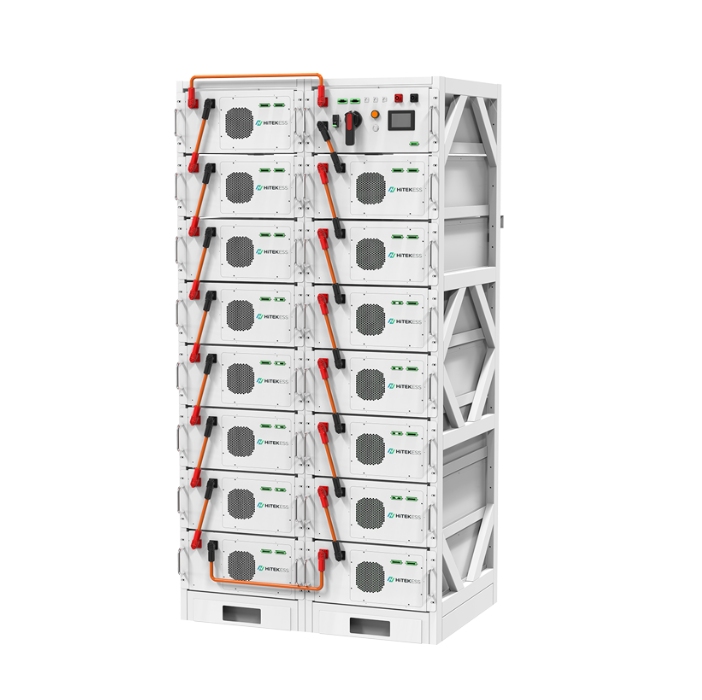
- Hitek Solar Lithium Ion Battery Storage System Rack Mounting 100kwh 200Kwh High Voltage Power LiFEPO4
Модель: HTPK-51280H
- Easy Quick Install Stacked Mounted 5kwh 10kwh Lihium Ion Battery 48V 51.2V 52Ah LiFePO4 for Solar Home Energy Storage
Модель: HT-30HS
- Hitek 100ah 200ah 280ah Solar Lithium Cell LiFePO4200kwh Lithium Battery High Voltage System EnergyStorage Battery CE/RoHS/Un38.3/MSDS
Модель: HTPK-51280H
- Germany Stock Hitek 5kwh 10kwh Powerwall Lithiumlon Batteries 5kw Storage LiFePO4 Battery for HomeHybrid off Grid Solar Power Energy System
Модель: HT-10LW
- Hitek Solar Lithium lon Battery Storage Systems RackMounting 100kwh 200 Kwh High Voltage PowerLiFePO4
Модель: HTPK-51280H