Grid following and grid forming are the two methods by which the battery inverter can interact with the AC grid. Grid following inverter follows the existing voltage wave form for managing the current while a grid forming inverter generates its own voltage waveform. It enables it to provide help to the grid even when there is no external signal available. Having one label or the other doesn’t ensure black start ability, the right to island and any particular approach to fault management. The engineers have to choose the correct mode of control.
The Control Difference in One Comparison
It is easiest to see the difference at the connection point. Grid-following tools track the current grid phase and then move current into the system. Grid-forming tools set their own voltage and frequency targets within set bounds. They also balance power with other units based on internal settings. No matter the type, every design still requires safety protection, energy caps, heat management, and proven logic for switching modes.
| Design question | Grid-following | Grid-forming |
| Reference | Follows external AC voltage | Sets local AC voltage reference |
| Typical control target | Active and reactive current or power | Voltage, frequency and power sharing |
| Weak-grid behavior | Relies on high reference quality | Can offer a reference if built right |
| Island operation | Needs a separate forming source | Works with right controls and safety |
| Verification | Sync and current flow checks | Stability and sharing tests |
Where Grid-Following Works Well
A robust utility network offers a steady voltage and frequency signal. In these cases, a grid-following BESS can send out active power and manage reactive power easily. It meets most standard connection rules without trouble. However, its performance is only reliable within certain grid strengths and safety limits. You should not call a grid-following design “grid-forming” just because it reacts fast to frequency changes or helps with reactive power.
Why Weak Grids Change the Design
The voltage will move around a lot in a poor grid system if there is a flow of current from the inverter. In case many grid-following systems operate in coordination, then they can cause interference amongst themselves because of their phase-lock loops. The grid-forming devices will help stabilize the voltage and frequency. However, the devices must be set according to the grid, the generators and the load. Any study should analyze the worst grid conditions.
- Map out the lowest short-circuit levels and the range of network impedance.
- Look for voltage and frequency swings after big shifts in load or power.
- Check how the unit works with other inverters and safety relays.
- Define what happens when the BESS hits its current or SOC limit.
- Confirm who is in charge of updating the models and control settings.
Grid-Forming Does Not Automatically Mean Black Start
Grid formation starts from scratch and involves a lot of procedures. First, you will require back-up power, available DC power, and ability to start the PCS. Then, there is magnetization of transformers, load pickup, and other procedures. Grid-forming PCS will give an AC signal for formation, however, the site should be able to handle that initial surge of power. The procedure is not supposed to exceed the limits of battery or current. It is important to test it on practice.
| Scenario | Question for the specification | Acceptance evidence |
| Dead-bus energization | Can the PCS power the bus and transformer? | Voltage and inrush data records |
| Load pickup | How much load can be added at once? | Frequency and voltage recovery data |
| Parallel operation | How is the load split? | P and Q trends with other units |
| Grid return | How does it rejoin the grid? | Mode switch and safety logs |
Current Limits and Protection Still Matter
Inverter current has hard limits due to heat and chip ratings. If a short circuit happens, a grid-forming unit might not provide the same long-term fault current as an old-style generator. Safety plans must use the specific fault models provided by the maker. You should check the transformer, the switches, and the relay settings as one single system. This is very important for islanded sites with many power sources.
Battery Energy Limits Affect Grid Services
Creating voltage is a software task, but keeping power flowing requires real stored energy and PCS space. If an operator uses the whole battery for trading but promises frequency help, there might not be enough SOC reserve for an emergency. You must set a clear policy for reserves. Define how long it lasts and how it recovers. The BMS must tell the PCS and EMS about current limits so they do not ask for power that is not there.
The way the BMS, EMS and PCS work together is key when setting these rules.
Select by Operating Scenario, Not by Label
A standard factory site might only need basic power flow and reactive help without ever leaving the grid. A remote microgrid, however, needs the BESS to start the AC bus and lead a diesel generator. Some utility sites need grid-forming traits only when the main grid is weak. For every project, clearly state who provides the voltage signal, how the system switches modes, and who can change the settings.
| Project case | Likely starting point | Critical study |
| Strong-grid C&I | Grid-following is often enough | Connection and power quality |
| Islanded microgrid | Needs a forming source | Load steps and black start |
| Weak-grid utility BESS | Review both control modes | Stability and safety relays |
| Backup transition | Switching logic is vital | Isolation and re-syncing |
What to Ask During Procurement and Testing
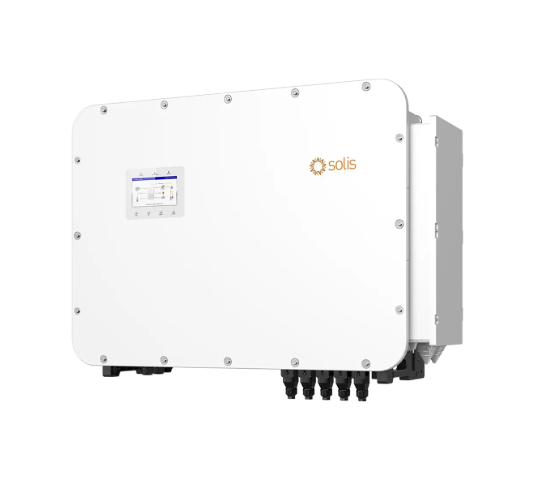
Ask for a plain list of all supported modes and when they turn on. The vendor must provide tested models, fault current data, and current limits. They should also show how the system switches modes and provide site test plans. Claiming to be “grid-forming” is not enough. You need a study that proves the system stays stable with your specific wires and other power units.
- Set the exact ranges for voltage and frequency and droop levels.
- List the active and reactive power limits at all key points.
- Write down how the unit limits current and reacts to faults.
- Test how it moves between being on the grid and being an island.
- Keep a record of the software and settings used for the final sign-off.
About HITEK ENERGY
HITEK ENERGY CO., LTD is a manufacturer of energy storage products for business and industry. Its systems offer a base for combining batteries and PCS controls with specific site needs. If you need grid-forming features, you should check them against the chosen PCS setup and project studies. Simply knowing the brand name does not confirm if the specific function will work for your site.
Buyers can look at the HITEKESS energy storage system portfolio to start their technical review.
Conclusion
Grid-following control uses the current AC signal to stay in sync. Grid-forming control creates its own signal to support weak or isolated systems. Pick your mode based on how the site will actually run. Then, double-check the stability, current limits, and battery reserves using real models and on-site testing.
FAQs
Can a grid-following BESS operate in an island?
Only if another source is there to set the voltage and frequency. The whole island plan must be fully engineered.
Does every grid-forming inverter provide black start?
No. Black start needs the right batteries, transformers, and a careful plan for adding loads.
Is grid-forming always better for a BESS?
No. It depends on the grid. A strong city grid often does not need these extra features.
What should buyers verify in a grid-forming claim?
Check the modes, models, current caps, and how it handles switching and safety.
HITEKESS BATTERY ENERGY STORAGE SYSTEMS
1. Renewable Energy Hitek Best 250kw Inverter off Grid on Grid Hybrid 50kw 100kw 150 Kw 250kw Complete Solar Power System Cost All in One Solar Panels System
Model: HT250KW-HY
2. 100kw 200kw 250kw 500kw 1MW off Grid Hybrid Solar Panels Commercial 1 Megawatt Solar System Complete Set Lithium Battery Backup 500kwh 1mwh 2mwh
Model:HT500KW-HY
3. Professional Design Grid Support 500kwh 800kwh 1mwh 2mwh Complete Containerized Battery Energy Storage Container System 500kw 1mwh
Model: HT500KW-HY
4. Hitek 100 Kw 200kw 250kw 500kw on off Grid All in One Solar Power System 20FT Container LiFePO4 Battery Energy Storage System 500 Kw 1mwh
Model: HT-500/1MWH-EC
5. Hitek Full 100kw 200kw 250kw 500kw Outdoor and Indoor Hybrid Container System 500kw Solar System 1000kwh Commercial Solar Power System with Battery
Model: HT-500/1000-EC