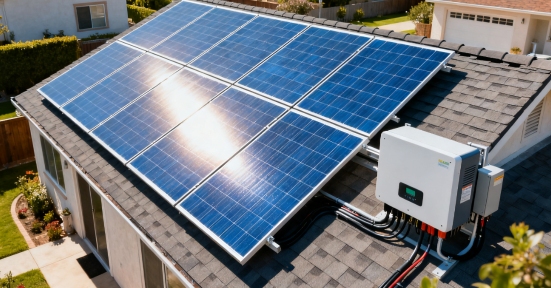
Solar inverters are the workhorses of any solar power system. They take the raw DC electricity from your panels and turn it into the AC power your home or business actually uses. When everything works, you barely notice them. When something goes wrong, though, it can feel like the whole system is down. The good news? Most common problems when using inverters are straightforward and can be fixed without calling in an expensive technician right away.
I’ve seen hundreds of support tickets and talked to installers all over the world. The same handful of issues come up again and again. Below is the real-world list — not theory, the actual faults people run into every day, plus the exact steps that usually solve them.
Quick Overview: The Most Common Inverter Problems at a Glance
| Problem | Typical Symptoms | Most Likely Causes | First Things to Check & Fix |
|---|---|---|---|
| No display / won’t start | Screen stays dark, no lights | No or low PV voltage, DC breaker tripped, blown fuse | Check PV voltage (>150 V usually needed), reset DC breaker, check fuse |
| No AC output | House runs on grid power even when sunny | Grid gone, overload, inverter in standby | Wait for grid return or reduce load, restart inverter |
| Over-temperature alarm/shutdown | Fan runs constantly, unit hot, derating | Dust buildup, blocked vents, high ambient temp | Clean fans/vents, improve airflow, shade unit |
| Ground/Isolation fault | Error like “ISO fault” or “Leakage” | Moisture in cables, damaged PV cables, poor grounding | Dry area, check cable insulation, tighten ground connections |
| Low or no battery charging (hybrid) | Batteries stay low, system pulls from grid | Wrong battery type setting, high battery temp, faulty BMS | Check battery settings match inverter, cool battery area |
| Frequent restarts or beeping | Inverter reboots, constant alarm | Grid voltage/frequency out of range, loose AC cables | Monitor grid with multimeter, tighten AC terminals |
| Reduced power output | System produces far less than expected | Shading, dirty panels, high temp derating, wrong MPPT | Clean panels, check for shading, verify MPPT voltage window |
| Unusual noise | Loud fan, grinding or buzzing | Dust in fan, failing fan bearing | Clean fan, replace fan if noise persists |
1. The Inverter Screen Stays Completely Dark
This is the single most common call we get. You walk outside, the sun is shining, but the inverter looks dead.
What usually happens:
- Not enough voltage from the panels reaches the inverter (most inverters need at least 150–200 V DC to even try to start).
- The DC isolator or breaker is off or has tripped.
- A fuse inside the DC line has blown.
- The AC breaker is off (rare, but it happens after storms).
How to solve it step by step
1.Grab a multimeter and measure the DC voltage at the inverter terminals. If it’s under the start-up voltage shown in your manual, wait for more sun or check for shading/loose MC4 connectors.
2.Look for the DC isolator (usually next to the inverter or at the array) — make sure it’s ON.
3.Check the small glass fuse on the bottom or side of the unit. Pull it out, test with multimeter, replace if open (they’re usually 10–15 A).
4.Still nothing? Reset the inverter — hold the button or flip the AC breaker off/on.
If the voltage is good and the fuse is good, the problem is almost always inside the unit — time to contact support.
2. No AC Output Even When the Inverter Is Running
The screen is on, fans spin, but no power goes to your home. Frustrating.
Typical causes
- The grid is out of the acceptable voltage/frequency window (most inverters shut down if grid is off-spec).
- AC breaker or RCD tripped.
- Overload — too many appliances running at once.
- Inverter stuck in “standby” or “sleep” mode because it thinks it’s night.
Quick fixes that work 9 times out of 10
- Wait 5–10 minutes — many inverters wait for the grid to stabilise.
- Reduce your house load (turn off air-con, pool pump, etc.) and restart the inverter.
- Check the AC breaker in your switchboard and the RCD (if you have one). Reset if tripped.
- Force a restart: turn DC off → wait 30 seconds → turn AC off → wait 5 minutes → turn both back on in that order.
3. Overheating and Thermal Derating
Inverters get warm — that’s normal. When they get too hot, they protect themselves by reducing power or shutting down completely.
Why it happens more often than you’d think
- Fans clogged with dust after a year or two.
- Installed in a hot garage or direct sunlight with no shade.
- Ambient temperature above 40–45 °C (104–113 °F) for long periods.
What actually works
- Clean the air intake and exhaust every 6–12 months with compressed air or a soft brush (power off first!).
- Add shade or a small awning if the unit is in direct sun.
- Install a cheap 12 V PC fan that blows across the heatsink if you live in a very hot climate — many customers do this and gain 10–15 % production in summer.
Ground Fault / Isolation Fault / Leakage Current Error
This one scares people because it sounds serious. It usually isn’t.
What the error actually means Water or condensation inside a junction box or MC4 connector creates a small leakage path to ground. The inverter sees it and shuts down to protect you.
Real-world fixes that usually clear it
- Go around every MC4 connector and junction box on a dry day and make sure they’re clicked in fully and the rubber seals are good.
- Look for chewed or sun-cracked cable insulation (birds and rodents love them).
- If it only happens when it rains, dry the area under the array and consider silicone sealant around suspect connectors.
- Still there? Call an electrician — it can be a genuine grounding issue.
5. Battery Not Charging (Hybrid Inverters)
Hybrid owners see this a lot. The panels are making power, but the batteries stay flat.
Most common reasons
- Battery type setting wrong in the inverter (e.g., set to “Lead-acid” when you have lithium).
- Battery temperature too high or too low — lithium especially stops charging above ~50 °C.
- BMS communication cable missing or wrong CAN baud rate.
- BMS inside the battery has gone into protection.
Steps that usually fix it
- Double-check the battery type in settings (most common fix by far).
- Check battery temperature sensor is plugged in and reading correctly.
- Make sure communication cable is the right type (many lithium brands need a specific cable or dongle).
- Force a full charge cycle from the grid once to wake up the BMS.
6. Frequent Restarts or Constant Beeping
The inverter starts, runs for a few minutes, then reboots — over and over.
Almost always the grid Grid voltage or frequency keeps drifting out of range for a split second (common in rural areas or after storms).
What actually solves it for most people
- Watch the grid voltage on the inverter screen for a day. If it swings wildly, call your utility — nothing you can do.
- If the grid is stable but the inverter still complains, slightly widen the voltage/frequency window in the advanced settings (only if your local rule allow it).
- Loose AC terminals can cause micro-arcing and restarts — tighten every screw terminal to spec.
7. Reduced Power Output on Sunny Days
You know your system should do 8 kW at noon, but it’s stuck at 4 kW.
Real causes (in order)
- Partial shading on just one or two panels (MPPT sees it and drops the whole string).
- Dust or bird droppings on panels (drops output 20–50 % easily).
- Inverter is derating because it’s hot (see overheating section).
- Wrong MPPT voltage window or wrong string configuration.
Fixes that give the biggest gains
- Clean the panels — boring but effective.
- Check each string voltage separately. If one string is 100 V lower than the others, you have shading or bad bypass diode.
- Log into the monitoring for a week. If it flat-lines at the same power every sunny day, the inverter is hitting its temperature limit — improve cooling.
8. Loud Fan or Grinding Noise
A quiet hum is normal. A jet-engine roar is not.
What’s usually happening
- Fan blades full of dust after 12–24 months.
- Fan bearing starting to fail (usually after 5–7 years).
Easy fix
- Power off, open the fan cover (most allow this), blow out with compressed air. 90 % of “loud fan” complaints disappear.
- If grinding continues, the fan is failing — replacement fans are cheap and take 15 minutes to swap on most models.
About HITEK ENERGY CO., LTD
HITEK ENERGY CO., LTD is a professional solar inverter manufacturer based in China with more than 10 years of experience in the renewable energy industry. The company designs and produces on-grid, off-grid, and hybrid solar inverters ranging from residential to commercial scale, and also provides energy storage systems and complete solar solutions. The focus is on reliability, long-term performance, and responsive customer support — exactly the reasons installers and homeowners choose HITEK ENERGY’S products worldwide.
Wrapping It Up
Most common problems when using inverters come down to simple things: dirt, loose connections, wrong settings, or the grid acting up. A little regular care — cleaning fans, checking terminals once a year, and keeping an eye on the monitoring app — prevents almost all of them. When issues do pop up, the steps above will solve the majority without a service call.
If you’ve tried the basics and the problem persists, don’t struggle alone. Reach out to a qualified technician or feel free to contact our support team — we’re here to help you get back to full production fast.
Frequently Asked Questions
Q: What are the most common problems when using inverters?
A: The top ones are no display/start-up, no AC output, overheating, ground faults, and battery charging issues in hybrid systems. Almost all are fixable on-site with basic checks.
Q: My inverter shows an error code — what should I do first?
A: Write down the exact code, power cycle the inverter (DC off → AC off → wait 5 min → reverse order), then check if it clears. If it returns, look up the code in your manual or send it to support with a photo.
Q: Is it normal for the inverter to get hot?
A: Yes, up to about 60 °C is normal. If it regularly shuts down from heat, clean the vents and improve airflow — it will pay for itself in extra production.
Q: How often should I clean my inverter?
A: In dusty areas every 6 months, elsewhere once a year is enough. Just compressed air on the fans and heatsink — takes 10 minutes and can add years to the unit’s life.
Q: When do I need a professional?
A: If you have measured voltages and everything checks out but it still doesn’t work, or if the fault is “internal” or “hardware,” call a technician. Better safe than sorry with high voltage.
HITEK ENERGY TOP-SELLING SOLAR INVERTERS
- Hitek 120/240V Split Phase Us Voltage Home Storage Hybrid Solar Inverter 10kw 15kw 20kw Hitek Energy off Grid InverterModel: HT-IN10KW-US
- Atess Three Phase 380V HPS150 HPS100 All in One Hybrid Inverter 150kw 100kw 50kw 30kw Hybrid Solar Inverters for Bess Solar Storage SystemModel: HT-HPS150
- Atess Growatt 3 Phase Inverter Solar Hybrid System 150kw 100kw 50kw 30kw Hybrid Solar Inverter on Grid off Grid 50kw HPS30 HPS50Model: HT-HPS150
- Deye 5kw 8kw 10kw 12kw 16kw 20kw Hybrid Energy Storage LV Battery Voltage 48V Range Hybrid Inverter EU/UsModel: DEYE-SUN-10K-SG02LP1-EU-AM3
- Deye 48V MPPT Solar Hybrid Inverter 5kw 6kw 8kw Low Voltage Single Phase Energy Storage Hybrid Solar InverterModel: SUN-6K-SG03LP1-EU