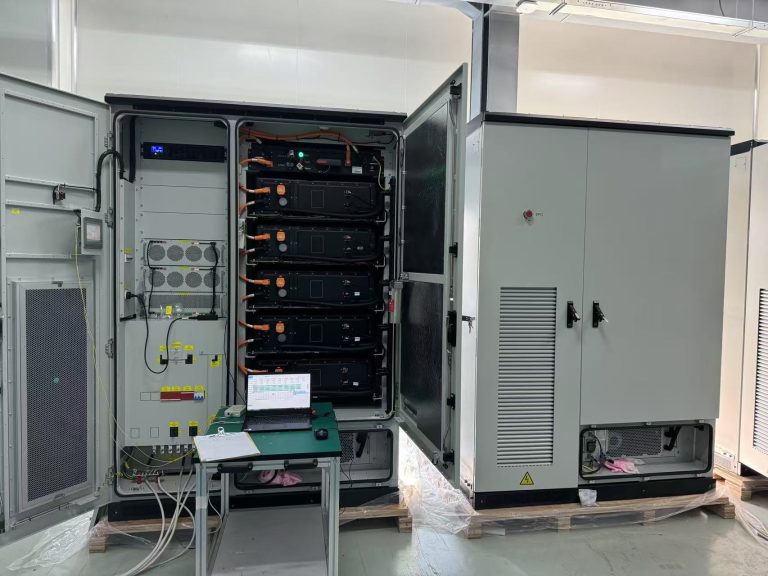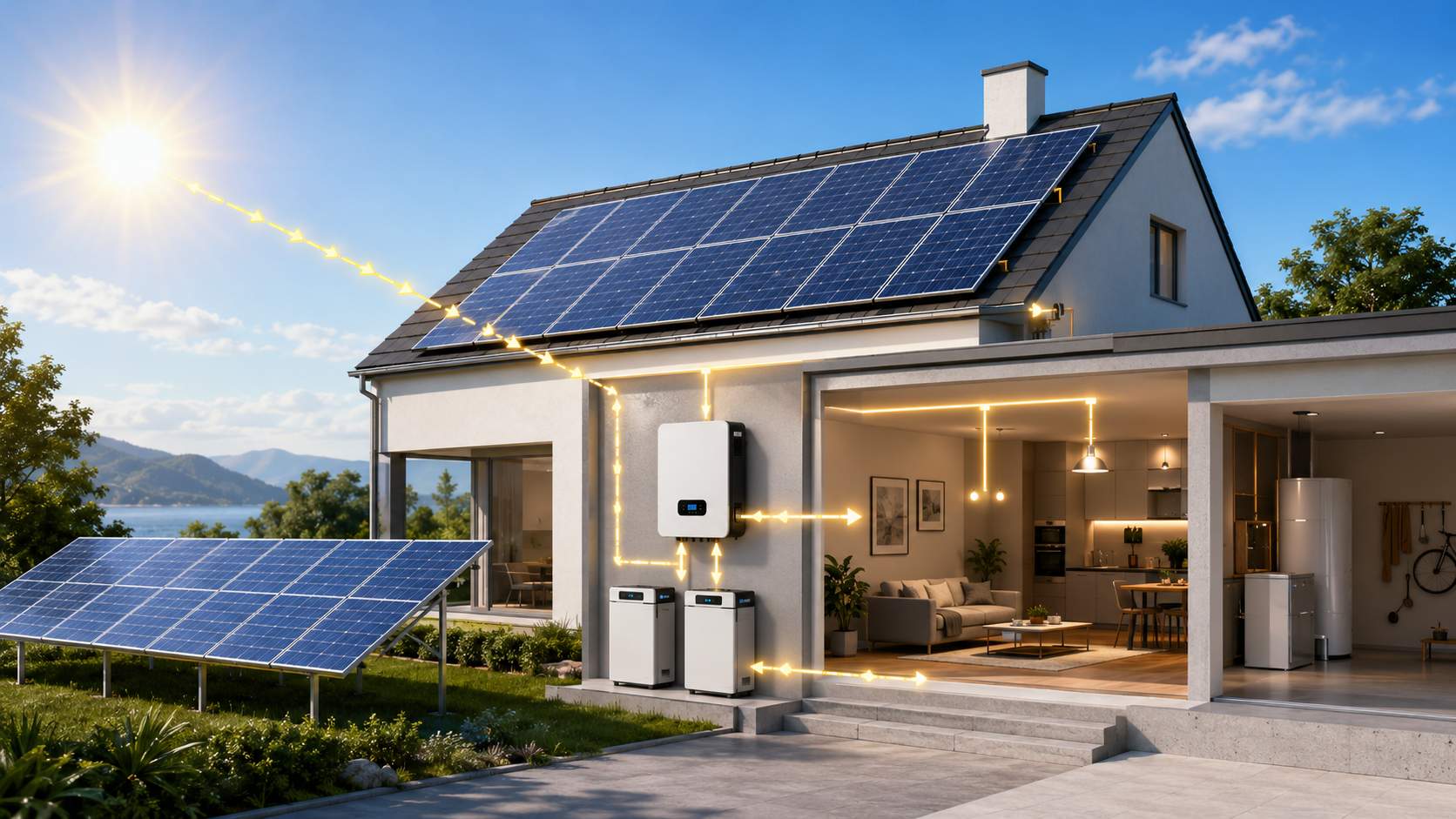
While solar panels can generate ample amounts of electricity during noon, the electricity generated is not always available at the time of greatest need. The generation reduces during the evening, and even the grid tie system requires electricity from the utility provider in case there is insufficient solar energy. Batteries come in handy here; however, the system also requires a way to transfer energy back and forth between panels, batteries, loads, and the grid.
This is where a hybrid inverter comes in. It integrates solar power generation, battery charging, and energy management within one point, thus making it more adaptable than the solar energy storage system.
What Is a Hybrid Inverter?
A hybrid power inverter is designed to work with solar panels, battery storage and the utility grid. It converts the direct current produced by photovoltaic panels into alternating current for normal loads while controlling when a connected battery charges or releases energy.
One Device, Several Energy Paths
A traditional solar inverter mainly converts solar DC power into AC power. A hybrid solar inverter also adds battery functions. Depending on settings and local grid rules, electricity may flow from solar panels to loads, into a lithium battery, from the battery to loads, or between the grid and battery.
In practice, the inverter acts as the traffic controller of the solar battery system.
How Does a Hybrid Inverter Work with Solar Panels and Lithium Batteries?
The working mechanism is very simple: utilize solar electricity that is available, store excess electricity that is usable, and tap into the grid as necessary. The order is not fixed but varies according to the level of PV generation, the state of charge of the battery, and the load.
Solar Power First
Solar panels produce DC electricity. The battery inverter monitors the available power and converts it based on the requirement of the AC loads. In most cases, usage occurs first. If the output from a solar panel is 80 kW while the facility consumes 50 kW, roughly 30 kW is available for other uses. That surplus can charge the battery instead of being exported immediately.
Surplus Energy Charges the Battery
Lithium-ion batteries keep electricity in the form of DC energy. Inverters control charging current and voltage, and they could be integrated with the battery management system. The BMS will check cell status, temperature, voltage, and the state of charge. Lithium iron phosphate, or LiFePO4, batteries are very common for stationary solar energy storage systems. Battery capacity should still correspond to the energy profile: it might not be charged enough if it is too big; and it will be charged too soon if it is too small.
Battery Power at Night or During an Outage
When there is not enough solar power to meet the demand, the inverter discharges energy from the battery. Business could consume battery power during the time with the highest tariffs; household – stored solar energy in the evening.
Backup power needs more than a battery. The inverter must support backup output, critical loads must be wired correctly, and enough battery power must be available. During a grid failure, a properly configured system can isolate backup circuits and supply them from the battery and available solar generation.
Hybrid Inverter vs Traditional Solar Inverter
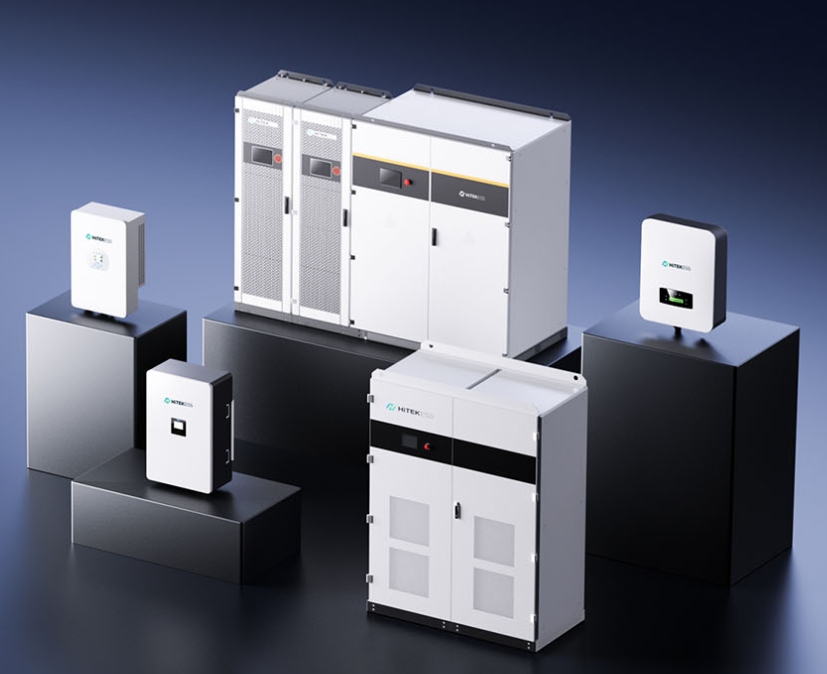
Both types convert solar electricity, but their roles differ once battery storage and backup power enter the plan.
| Feature | Traditional Solar Inverter | Hybrid Inverter |
| Solar DC-to-AC conversion | Yes | Yes |
| Direct battery integration | Usually no | Yes, when compatible |
| Battery charge/discharge control | Separate equipment | Integrated |
| Backup power | Normally limited | Available on suitable systems |
| Solar, battery and grid control | Basic | Integrated |
| Future storage expansion | May need extra hardware | Often easier to plan |
A conventional inverter will be sufficient for a simple grid-tied photovoltaic project. A battery-friendly inverter will become important if there is an intention of using the battery or other applications.
Why Pair a Hybrid Inverter with Lithium Batteries?
The inverter and battery have to work together. Voltage and current ratings, communications, energy available and protection settings will be important.
Better Use of Midday Solar
Many sites have a mismatch between solar production and demand. Rooftop PV may peak around noon while household use rises later, or a commercial site may face an evening load peak. A solar inverter with lithium battery storage can shift midday energy into that later window.
Faster Energy Control
Modern battery systems can react quickly to changing loads. When a motor starts, a cloud reduces PV output or a tariff period changes, the hybrid inverter can adjust power flow within programmed limits.
Fewer Separate Components
In a new solar-plus-storage project, an integrated hybrid design can reduce separate power-conversion devices. That may simplify wiring, monitoring and control, although protection, isolation and professional commissioning are still required.
Practical Benefits of a Solar Energy Storage System
A hybrid solar system works best when its operating strategy matches the site:
- Higher solar self-consumption by storing surplus PV for later use.
- Peak-load support during selected high-demand periods.
- Backup power for critical circuits when the system supports islanded operation.
- Flexible charging and discharging around time-of-use tariffs or reserve settings.
- Lower grid dependence during expensive or unreliable periods.
Results still depend on electricity prices, export rules, battery size, solar yield and load behavior.
How to Choose the Right Hybrid Inverter
Selection starts with the electrical profile, not the product label. The unit must match the site’s battery voltage, peak loads, PV design and grid requirements.
| Check | Why It Matters |
| Continuous and peak power | Defines which loads can run together |
| PV input and MPPT range | Must match the solar array |
| Battery voltage/current | Determines battery compatibility |
| Backup output | Important for outage operation |
| Battery communication | Supports coordinated control |
| Grid certifications | Must suit the installation market |
| Monitoring | Tracks PV, battery, load and grid power |
| Expansion options | Matters for future PV or storage growth |
For commercial projects, short-interval load data is more useful than monthly bills alone. A brief peak may set inverter power, while hours of evening demand may set battery capacity.
Where Hybrid Solar Systems Make Sense
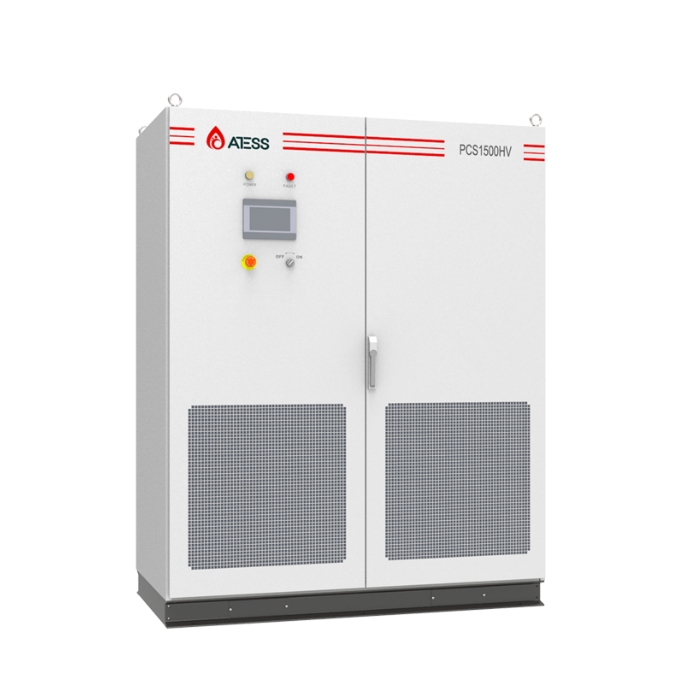
Different users gain value from different operating modes. Homes with strong evening demand may focus on self-consumption and backup. Warehouses can store midday PV for late shifts. Factories exposed to demand charges may use a commercial solar battery system for peak shaving. Remote facilities may use an off-grid hybrid inverter strategy to reduce grid or generator dependence.
The common factor is a clear energy-flow goal: when power is produced, when it is consumed and how long essential loads must run without the grid.
About HITEK ENERGY CO.,LTD
HITEK ENERGY CO.,LTD is an energy storage products supplier catering to various residential, commercial and larger-scale power needs. Their product line consists of lithium batteries, energy storage solutions, inverters, solar panels and solar systems. HITEKESS also emphasizes research and development expertise, quality management system and traceability through safe and consistent long-life cycles.
For project buyers, an integrated product scope can help when battery storage, power conversion and system support need to be evaluated together. HITEKESS is an energy storage products supplier catering to various residential, commercial and larger-scale power needs. Their product line consists of lithium batteries, energy storage solutions, inverters, solar panels and solar systems. HITEKESS also emphasizes research and development expertise, quality management system and traceability through safe and consistent long-life cycles.
Conclusion
The hybrid solar inverter connects the photovoltaic modules, lithium batteries, electric load, and utility grid. The key benefit is the ability to control where the energy will go and when it will be used.
For a proper design, all factors like inverter capacity, photovoltaic input, lithium battery suitability, backup system, and grid regulations need to be considered at once. If all factors align with the load profile, a hybrid solar inverter will improve self-consumption.
FAQs
What does a hybrid inverter do?
A solar battery inverter converts solar DC electricity into AC power and manages energy flow between solar panels, a battery, loads and the grid. It can also control battery charging and discharging when the connected battery is compatible.
Can a hybrid inverter work without a battery?
Some battery-ready inverter designs can operate with solar and the grid before a battery is added, while others have specific requirements. Battery-free operation should be confirmed in the technical documentation before installation.
Is a hybrid inverter better than a normal solar inverter?
Not always. A normal grid-tied inverter can be simpler for a solar-only project. A hybrid solar inverter is more suitable when battery storage, backup power, time-of-use control or future storage expansion is required.
How should a lithium battery be matched with a hybrid inverter?
Check battery voltage, charge and discharge current, usable capacity, communication method, protection settings and the inverter’s approved battery requirements. Matching only nominal voltage is not enough for a stable solar inverter with lithium battery system.
HITEKESS Best-Selling Hybrid Solar Inverters
- Atess All-in-One Inverter Hybrid Solar Inverter 500kw 300kVA 200kVA 150kVA 100kVA 50kw 30kw Inverters with Factory System
Model: HT-HPS100
- Hitek 120/240V Split Phase Us Voltage Home Storage Hybrid Solar Inverter 10kw 15kw 20kw Hitek Energy off Grid Inverter
Model: HT-IN10KW-US
- Atess All in One Energy Storage System Inverter 30kw 50kw 100kw 150kw Hybrid Inverter HPS 100 150 Solar Power Inverter for Solar Panel System
Model: HT-HPS150
- Deye on Grid off Grid Three Phase Inverter 5kw 8kw 10kw 12kw 380V 400V 3 Phase Hybrid Solar Inverter
Model: SUN-12K-SG04LP1-24-EU
- Hitek off Grid Solar Inverter 5kw 8kw 10kw Singe Phase 220V 230V 240VAC Solar Energy System Pure Sine Wave Inverter 10000W for Home
Model: HT-SPI-10KW