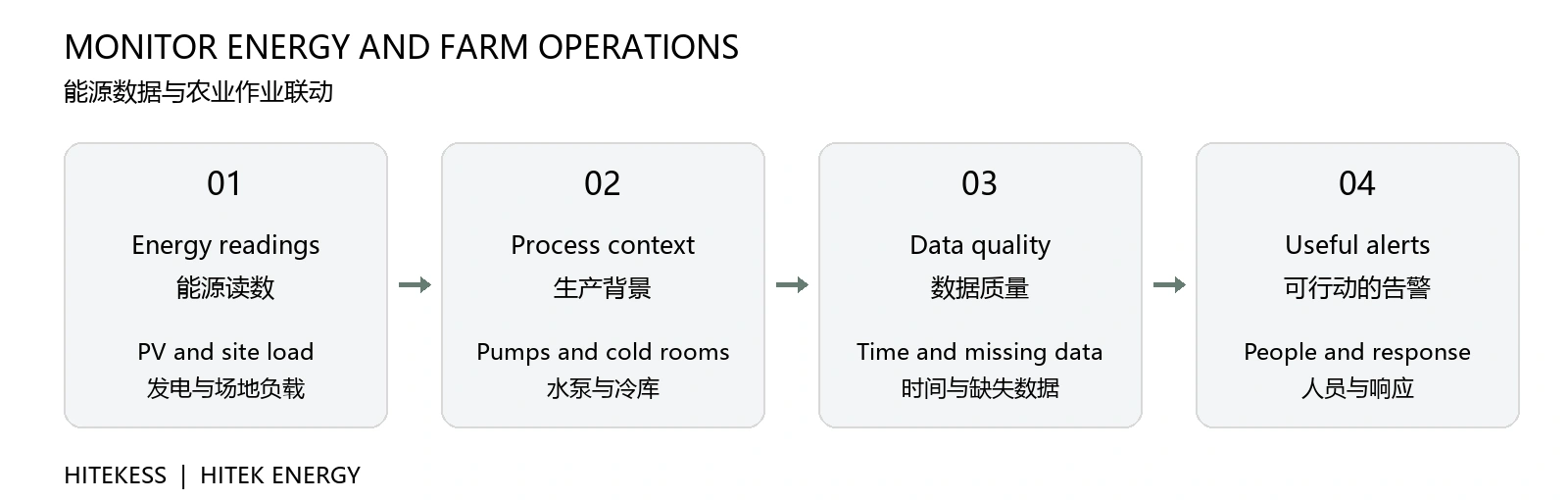
A solar monitor for farms will reproduce how the entire energy system is assisting multi-specialty work that matters. You start with solar generation, followed by site demand & grid exchange and finally add battery condition where there is a stationary storage installed. Connect those records to irrigation schedules and refrigeration duties, plus other farm operations. Not every break or surprise electricity bill can be accounted for by those daily generation totals.
This guide enables farm managers to clarify what sort of monitoring brief might be valuable before buying or replacing a solar system. It outlines measures to be called for and questions to ask the supplier. Don’t presume signals available from a dashboard graphic; it depends on what equipment, meters or sensors and software included in the project.
Start with the farm task being supported
Determine what equipment impacts production and at what time it operates. Different farms can have really different schedules for an irrigation pump, a cold room and a packing shed. Take note of which loads can be shifted in time and which need to continue operation. Note down who has to be notified if task gets interrupted. If you need an alert when the task is interrupted, write down who needs it
However, monitoring should connect energy behavior to these operational needs. Monitor the operating run of pumps with respect to solar production and site demand in case there is an irrigation cycle starting exactly at noon. If refrigeration occurs after dark, check the night supply along with that of the days generation. Establish seasonal schedules to ensure that an expected change in harvest activity is not mistakenly identified as an electrical fault.
For instance, a farm that is evaluating an on-grid solar system may only need to understand generation and how much of it can be consumed vs. purchased from the grid. Visibility into the role of a battery would also be useful for commercial solar and storage solution sites. Before you add another field to your dashboard, define the decision that each measurement will serve. Before sprinkling more fields to the dashboard, clearly define which decision will each measurement support
Specify the measurement points
A reading becomes useful when its place (where it is found) and meaning are clear. Find out where PV output is measured, whether site load metered or calculated separately and grid meter separate imports from exports. Log Which Time Zone and Interval was used for each Data stream! Log the timezone and interval of each data stream
Separate power from energy. It is a rate of supply or consumption, instantaneous (eg power in kW) at any given moment and over an averaging interval. When we talk about energy, kWh describes the amount accumulated over a period. Do the comparison over like-for-like intervals — you should not compare a peak-power reading with the total energy for one day. Use like-for-like comparisons; time of peak power reading should not be compared directly with daily total energy
| Measurement group | Information to request | Farm management question |
| Solar generation | Power trend, energy totals and equipment status | Was generation available during the planned farm task? |
| Site consumption | Total demand and selected load measurements | Which activity coincided with increased grid demand? |
| Grid exchange | Import, export and supply status | Was electricity purchased, exported or unavailable? |
| Battery operation | State of charge, power, limits and alarms | Was storage available for its assigned duty? |
| Data quality | Last update, missing intervals and communication status | Is the dashboard showing current, complete information? |
| Operational sensors | Pump flow, pressure or cold-room temperature when specified | Did the farm process achieve its intended result? |
Process sensors are separate requirements. Electrical consumption alone does not demonstrate that any water made it to the field or properly maintained produce stayed within optimal temperature limits. Do not leave it to the solar platform to figure out these process measurements and responsibilities — specify them. Define the relevant measurements and who is responsible for those processes instead of assuming your solar platform will figure it out
Interpret storage information in context
Request time history of state of charge (along with charging and discharging power) at Where a Battery is Installed When the equipment exposes its operating limits and relevant alarm states, incorporate those into your field set. The battery is used for a back up role in case it does not discharge whenever the farm painlessly imports power. A battery can store energy for a back-up purpose — and be designed not to discharge when the farm imports power
That behavior is to be explained by an operating strategy. Find out which task takes precedence, who can change settings and what the system should do in case of communication interruption. The state-of-charge percentage should not be viewed as assured backup hours; runtime is also a function of usable energy, load and system limits. This may not even equate to a reliable number of hours back up — because the actual runtime also depends on usable energy as well, plus load and system limits; Think twice before assuming that state-of-charge percentage guarantees specific backup hours
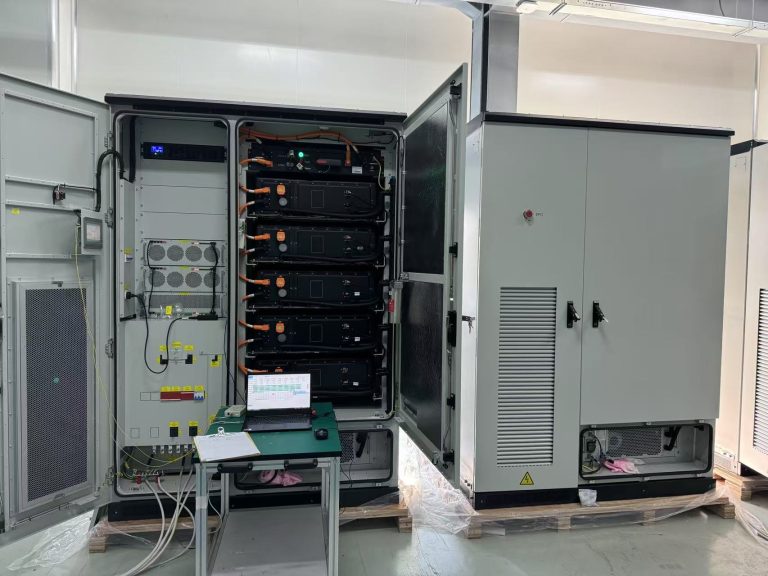
The configurations of hybrid systems were published for HITEKESS, including a monitoring device in the configuration. Request Actual signal list Meters and interface details for farm project. This sole product listing does not imply support for all irrigation sensors, temperature controllers or requests in software. The mere existence of that product listing does not make the case for: but irrigation sensors, refrigeration controls or all requested software features
Use trends to investigate exceptions
Begin an investigation by checking timestamps and communication status. An unchanged chart could be stale data rather than steady operation. Identify missing intervals before interpreting a daily total, especially after a network interruption.
Then do a comparative analysis of operating records for the same period. A drop in solar generation may be correlated with a weather event, shading effects due to vegetation or other objects, equipment unavailability (e.g. Increase grid purchases may vary with a new load schedule Tracking narrows the questions, but no single chart can make for a causal case. Monitoring makes questions more tight, however I hardly ever find that one chart leads to the cause
Visualize an imaginary irrigation run in which PV output stays the same but grid imports increase. The next practical step is to check pump operation and other loads that run together. The occurrence in the event could reflect normal demand instead of a solar fault, if the load ramped up as scheduled. A Reported pump run that produced no significant measured water flow means the farm needs a process investigation — not just an escalated generation target.
Make alarms actionable for the people on site
For each critical alert, specify a recipient, an anticipated response and escalation contact. Identify instrument faults, communication errors and operational alerts. A missing data alert should not have the same appearance as a confirmed loss of supply to an important load. A report for missing-data alert should not mirror a completed supply loss to vital load
Get the installer and farm team on board with thresholds and delays that are appropriate to your equipment/operation. Having too much repetition of notifications can cause significant events to hide. Report a problem and where to find approved procedures should be something all farm staff are trained in, but electrical intervention must remain the domain of qualified persons. Farm staff must know how to report a problem and where to find approved procedures; however, electrical intervention lies solely with qualified personnel.
Discuss technical support arrangements alongside the alarm plan. Confirm who checks remote information, who attends site and who supports third-party sensors. Clarify any subscriptions, mobile connectivity or network access that the owner must maintain.
Review performance against a useful baseline
Maintain records on energy data seasonal activity, any large equipment changes and scheduled shutdowns. Identify comparisons which involve similar operational periods and make adjustments for weather changes and/or workload before concluding that the performance has deteriorated. What was termed a monthly total is an entirely uncontextualized metric in regard to operational context. This monthly total with no operating context is a real trap
An irrigation review could correlate energy use, pumping hours logged and water delivery. For refrigeration, it might collate the energy dataset with information about temperature history and operational time schedule. These are management tools, not global benchmarks of efficiency. The farm should implement practices that represent its own process and quality of measurement.
Frequently asked questions
Is inverter monitoring enough for a farm solar system
Q: It just represents useful generation and equipment information but is not the whole site, so it will never reflect consumption at that full site or exchange with grid as a percentage of process performance? You may require additional metering or some sensors. Validate what is concrete, what can be measured indirectly and whether everything remains outside of the proposed footprint. Check what is measured directly, which is calculated and faces data that are outside of the monitoring scope you deliver
Can solar monitoring for farms predict an irrigation failure
A: It might expose abnormal trending or equipment alarms but its not a prediction. Where applicable, electrical data is combined with pump and water-delivery measurements. Real functions are to be confirmed by the supplier while for trigger of warning, farm requires a response The actual functions it offers need to be confirmed by the supplier, and how should the farm respond when a warning pops up – do you have this information pre-defined?
What should happen when internet access is lost
A: Verify the local operating behavior, data storage capability and upload process of your equipment with the vendor. Remote visibility, and local system operation Really two separate questions The project will need to detail how unmanaged communications are reported and identify critical operation or protection functions that remain agnostic of the remote dashboard as well. Specifying how missing communications are reported and which critical operating or protection functions operate outside the remote dashboard system.
Request monitoring as part of the complete system
When you talk about HITEKESS solar system – send farm load schedule and critical processes, as well as desired measurement to HITEK ENERGY. Requires a particular scan with what relieves, alarm obligations and entry to the information. The best type of dashboard is one that informs the farm team about what to check and who should do any action.
HITEKESS COMMERCIAL SOLAR STORAGE MONITORING SYSTEMS FOR FARM USE
- Hitekess Professional Design Hybrid off Grid Photovoltaic System 100 Kw 150kw 250kw 500 Kw 500kw All in One Complete Solar Panel Battery System
Model: HT500KW-HY
- Hitekess Solar System 100kw 100kwh 200kwh 50kw 150kw 250kw 350kw 500kw 800kw 1MW Solar Energy Storage System with LiFePO4 Battery
Model: HT500KW-HY
- Hitek 250kw 500kw 500 Kw Ground Mounted Industrial Hybrid Solar Power System LiFePO4 Battery on off Grid Energy Storage Complete Solar Panel System Hybrid Kit
Model: HT500KW-HY
- Hitekess Factory Farm 30kw 50kw 100kw 150 Kw 250kw Photovoltaic Solar Energy System Hybrid off Grid 250 Kw Price with Battery
Model: HT250KW-HY
- Hitek Complete Set Solar Energy System 100kw 150kw 200kw 250kw 500kw Generator Battery off Grid Solar Power System Cost for Farm
Model: HT500KW-HY
- Hitekess Factory Price Green Energy 500000W 500kw 500 Kw kVA Full Solar Power System Full Kit Battery Storage Systems 100kVA 100 Kw 1mwh
Model: HT500KW-HY