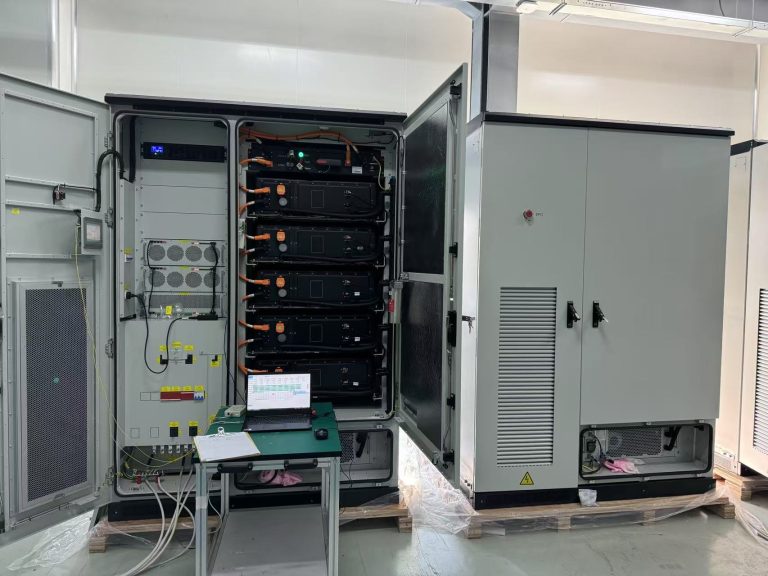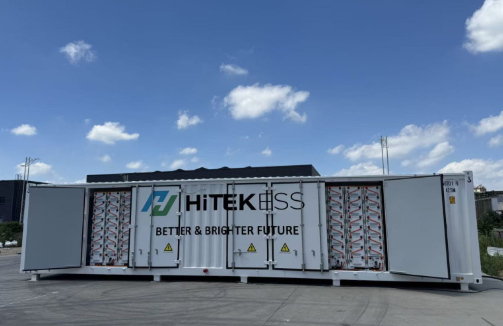
The total charging power of a fast charging station is usually more than the grid supply can offer at any particular point. The BESS operates on the basis of taking care of the peak demands during the time when the energy supply comes from the utility lines. Sizing a BESS system cannot be based only on the number of chargers alone but rather requires a consideration of other aspects like demand peaks, power import limits, recharge intervals, and energy losses. This guide explains a practical sizing approach and the control strategies that make the system effective.
Why Charger Nameplates Overstate and Understate the Problem
Taking into account all of the highest ratings of the plugs will provide an important limit. Yet, the vehicles do not need their full capacity at the same time. At the same time, taking an average for the daily demand may be deceiving. Queues appear quite frequently, especially if a lot of vehicles come simultaneously. Therefore, you should conduct site analysis by using data from the timestamped sessions. Another option is to consider a model with parameters such as vehicle arrival rates, and power curves.
| Input | What to record | Design implication |
| Grid connection | Import limit, transformer and tariff | Limits steady charging and battery refill |
| Charging demand | Concurrent sessions and power curves | Defines peak BESS discharge |
| Queue target | Wait times and dwell periods | Guides the power sharing rules |
| Battery duty | Cycles, SOC reserve and recharge time | Determines energy and life checks |
Calculate the Power Gap First
First, examine each of the time periods. Deduct the available power of the grid for the charger from the charging power requirements. Do not forget about the building loads and equipment that is installed, before allocating any remaining capacity to the cars. The highest value shows your discharge-power target for the BESS. As soon as you set the target, make sure that inverter, transformer, and cables are capable of carrying such load.
As an example, let us consider the installation with a 400 kW importing capacity limit. Other loads consume 60 kW and there will be 340 kW left for charging. If the vehicles demand 500 kW of power, there will be 160 kW shortage. During 20 minutes, the battery will need to supply about 53 kWh. The above numbers are just examples. They do not show the HITEKESS product capacity rating.
| Example variable | Value | Calculation |
| Grid import cap | 400 kW | Fixed site limit |
| Other site load | 60 kW | Actual measurement |
| Charger demand | 500 kW | Combined requests |
| Battery power gap | 160 kW | 500 – (400 – 60) |
| 20-minute energy | About 53 kWh | 160 x 20/60 |
Size Energy for Consecutive Events and Recharge
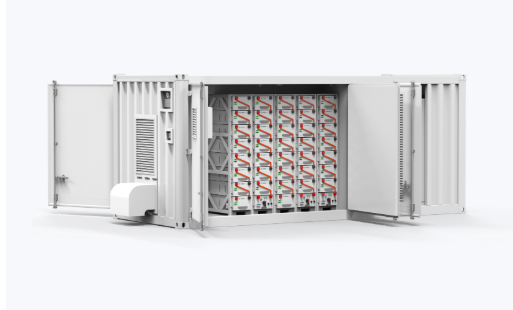
A single peak is not sufficient alone. It is necessary to calculate the sum of all battery discharges in a period of peak times. Then, you have to determine the moment when demand lowers enough so that you will be able to recharge the battery without surpassing the limitation of the maximum grid capacity. In case there are two 20 minutes of peaks with only five minutes rest between them, these events will function as one big event, as the time will be too little for recharging. The planning should include limitations on the usable SOC, losses, and buffer due to possible future battery aging.
The rate of 160 kW discharge with 160 kWh of usable energy may seem as if it will last for an hour. Still, it often does not take this long because of such aspects as auxiliary power, temperature limits, and range of the PCS.
Coordinate Chargers, EMS and Battery Controls
It is vital that the EMS remains connected to the meter at the site, charging requests, and the state of charge of the BESS. The EMS should have information from the BMS too. The EMS is able to allocate power equitably, use the battery for peak shaving, and even throttle the chargers below the point where the grid is maxed out. In case of a meter or communication failure, a safe fallback solution should be in place. This normally entails limiting power requests from the chargers.
- Monitor the grid-import limit using a single meter boundary for the EMS signal.
- Sync the clocks for charger requests, PCS output, and site import data.
- Decide if power is shared equally or based on vehicle priority.
- Create a low-SOC plan to throttle chargers before the BESS shuts down.
- Practice recovery steps for faults in the meter, PCS, or network.
Check the Business Case Against the Actual Tariff
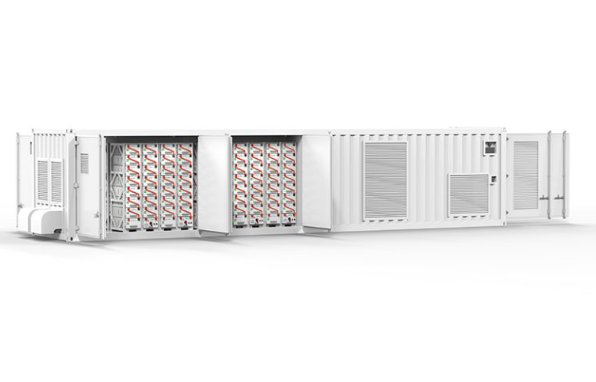
Using a battery might help you avoid expensive grid upgrades. However, you must weigh this against the cost of the hardware, energy losses, and battery wear. You should also consider potential revenue lost when you have to limit charging speeds. If a site is rarely busy, managed charging might be enough. Storage is most valuable for sites with frequent, short bursts of activity. If chargers run at full power for many hours, the grid still has to do the heavy lifting.
| Option | Main benefit | Constraint to test |
| Managed charging | Lower upfront cost | Longer wait times |
| Grid upgrade | Consistent high supply | High cost and slow setup |
| BESS plus controls | Handles sudden peaks | Refill and cycle costs |
| Hybrid approach | Scalable growth | Complex integration |
Engineering Checks Before Procurement
A BESS for EV charging must integrate perfectly with the site’s electrical layout. You need to check the connection point, safety settings, and harmonic levels. Other factors include reactive-power rules, cooling needs, and fire safety. The PCS must be able to handle fast changes in power. Additionally, the BMS needs to share real-time limits with the EMS. For more on these technical details, read the HITEK ENERGY article on BESS transformer sizing.
About HITEK ENERGY
HITEK ENERGY CO., LTD is a manufacturer of energy storage products for commercial and industrial use. Its diverse portfolio helps teams plan battery setups, power conversion, and control strategies together. For fast-charging stations, we provide solutions based on actual demand data and grid limits. We focus on safety and smart operation rather than just selling a generic battery box.You can share your load data and project goals through the HITEK ENERGY contact page.
Conclusion
A BESS allows a charging site to work beyond its grid limit for short periods. However, it cannot create energy out of thin air; the grid must eventually refill the cells. To design a good system, calculate the power gap during busy times and simulate the recharge process. Always compare the battery option against a standard grid upgrade using real utility rates. This ensures the project makes financial sense over the long term.
FAQs
These answers cover the basic questions for station owners.
Can a BESS replace a grid upgrade at a fast-charging site?
Yes, it can often delay or reduce the need for an upgrade if peaks are short. However, it cannot support a constant load that is higher than the grid’s capacity.
How much battery capacity does a fast-charging station need?
It depends on the energy shortfall during busy hours, the SOC window, and how much time you have to recharge between cars.
Does the battery charge while EVs are charging?
It can, provided the total demand is lower than the grid cap. During very busy times, the battery will usually stop charging or start helping the grid.
What happens when the battery reaches minimum SOC?
The EMS is designed to slow down the chargers. This prevents the battery from hitting a hard shutdown and protects the equipment.
HITEKESS BEST SELLING BESS ENERGY STORAGE SYSTEM
1. Hitek Commercial Storage Solar Tracking System Dual Axis off Grid Camper Van Complete Set 100kw 150kw 200kw 250kw 500kw Farm Solar System
Model: HT500KW-HY
2. Hitek Containerized Solar System 100kw 250kw 500kw Hybrid Solar System with 500kwh 1mwh Lithium Battery 500kw 1MW Solar Battery Energy Storage System Price
Model: HT500KW-HY
3. Hitek Complete Set Solar Energy System 100kw 150kw 200kw 250kw 500kw Generator Battery off Grid Solar Power System Cost for Farm
Model: HT500KW-HY
4. Hitek Three Phase Industrial Hybrid Full Complete Solar Farm System 100kw 120kw 150kw 200kw Solar Panel Ground Mounted Rack Energy Storage System Set 150 Kw
Model: HT150KW-HY
5. Hitek All in One PV Solar Power System 100kw 200kw 300kw 500kw on off Grid Industrial Solar Energy Battery Hybrid Energy Storage System for Roof Ground
Model: HT500KW-HY