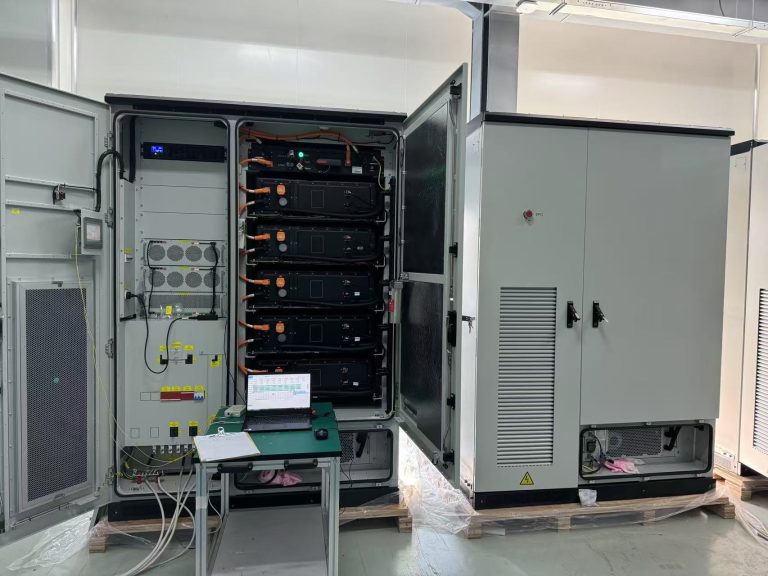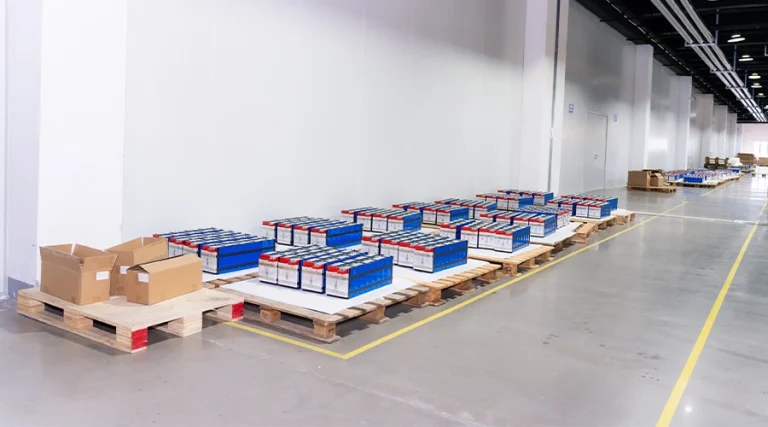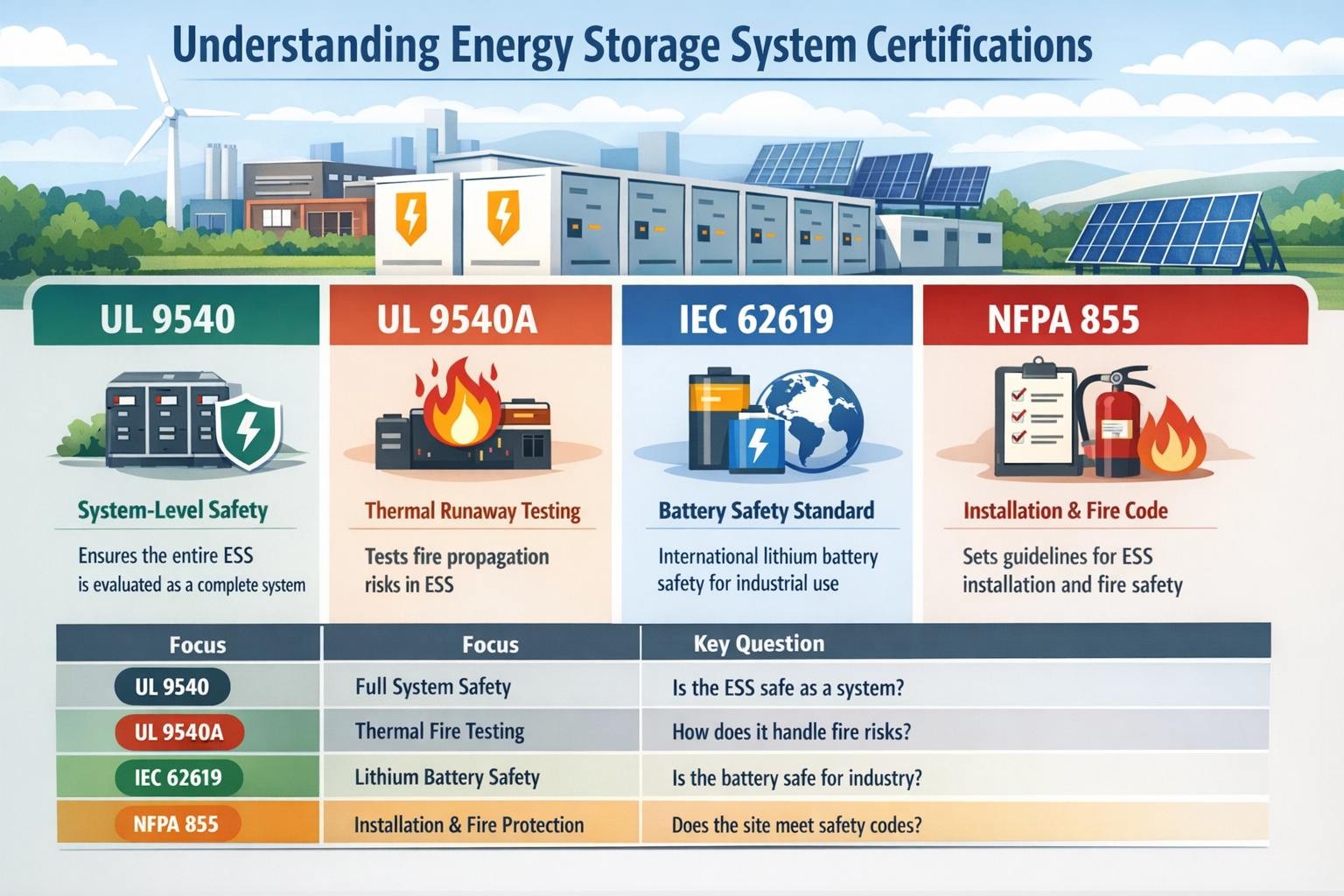
Buying a battery energy storage system looks simple until the paperwork starts. One supplier says the system is “UL certified.” Another highlights UL 9540A. A third talks about IEC 62619, while the EPC team asks whether the project will meet NFPA 855. For many buyers, that is the point where the process gets muddy.
The problem is not a lack of certificates. It is that these documents sit at different layers. UL 9540 is a system-level safety standard for energy storage systems and equipment. UL 9540A is a thermal runaway fire propagation test method. IEC 62619 covers the safe operation of secondary lithium cells and batteries for industrial uses, including stationary applications. NFPA 855 sets minimum requirements for mitigating hazards in stationary energy storage system installations. Looking at all four together gives a much clearer picture of energy storage compliance.
Unlocking Energy Storage System Certifications
The confusion usually starts because “certified” sounds like one final yes-or-no answer. In real projects, it is not. A battery energy storage system can involve cell safety, pack safety, full system safety, thermal runaway testing, site layout, fire code review, ventilation, spacing, and local approval. A paper that looks strong in a brochure may only cover one of those layers.
That is why buyers need to read each standard by purpose, not by logo.
UL 9540: the system-level check
Why certification language confuses buyers? UL 9540 is the main system-level safety standard for energy storage systems and equipment. It looks at the full ESS, not just a cell or module. That includes how batteries, controls, communication, charging and discharging functions, and related hardware work together as one system. In North America, it is widely treated as the basic safety gate for stationary ESS projects.
For a buyer, UL 9540 answers a practical question: has the complete battery energy storage system been reviewed as a system rather than as a stack of separate parts? That matters in residential storage, commercial and industrial energy storage, and utility-scale deployments alike.
UL 9540A: the thermal runaway test
UL 9540A is often misunderstood. It is not a product listing. It is a test method used to evaluate thermal runaway fire propagation in battery energy storage systems. In plain English, it asks what happens when one cell fails and whether that failure spreads through the module, unit, or installation. UL states that the method is explicitly cited in NFPA 855 for large-scale fire testing and is used when design or installation conditions go beyond certain code limits.
This makes UL 9540A highly relevant for projects where fire officials, insurers, or consultants need real failure-behavior data. It is especially important for larger systems, outdoor cabinets, and containerized BESS where layout, separation distance, and suppression strategy can affect approval.
IEC 62619: the battery safety baseline
IEC 62619 sits at a different layer. It specifies requirements and tests for the safe operation of secondary lithium cells and batteries used in industrial applications, including stationary applications. That is why IEC 62619 shows up so often in export projects and global procurement discussions.
For buyers outside North America, IEC 62619 is often one of the first battery safety documents checked. Even in projects where UL standards dominate, IEC 62619 still helps show that the lithium battery side of the product has been tested against a widely recognized industrial safety standard.
NFPA 855: the installation and fire code layer
NFPA 855 is not a product certificate. It is the standard for the installation of stationary energy storage systems, and its purpose is hazard mitigation. That means the focus shifts from the battery itself to where and how the system is installed: separation, fire protection, ventilation, occupancy, emergency response, and other site conditions. NFPA says the current edition provides minimum requirements for mitigating hazards associated with ESS.
For buyers, that changes the conversation. A system can look strong on paper and still face delays if the installation plan does not match the fire code path that local authorities expect.
A simple way to compare the four standards
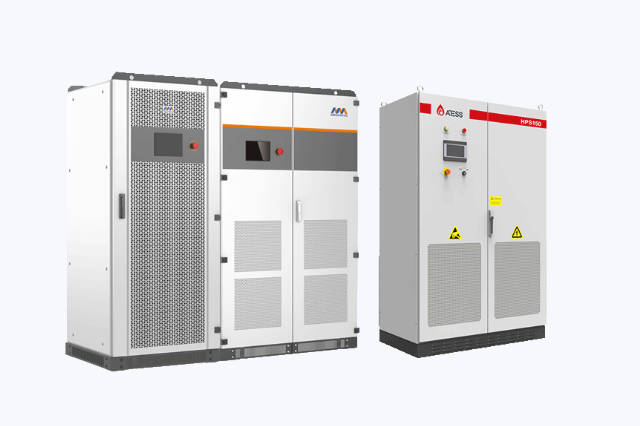 The easiest way to read energy storage certification is to sort each document by the question it answers.
The summary below is based on the official descriptions of UL 9540, UL 9540A, IEC 62619, and NFPA 855.
| Standard | Main focus | What it tells a buyer |
|---|---|---|
| UL 9540 | Full energy storage system safety | The ESS has been reviewed as an integrated system |
| UL 9540A | Thermal runaway fire propagation test | There is test data showing how fire events may spread |
| IEC 62619 | Industrial lithium cell and battery safety | The battery side meets an international industrial safety baseline |
| NFPA 855 | Stationary ESS installation safety | The project must match site, layout, and fire protection rules |
Seen this way, the standards stop competing with each other. They fill different roles. UL 9540 says the system is reviewed as a system. UL 9540A shows how it behaves in a worst-case thermal event. IEC 62619 supports battery safety at the industrial level. NFPA 855 governs how the stationary energy storage system can be installed.
What these certifications mean in real buying situations
The buyer’s real question is rarely “What does this acronym mean?” It is usually “Will this project pass review, get installed, and run safely for years?”
That is where use case matters.
Residential energy storage projects
In residential storage, buyers often focus on backup power, self-consumption, and lower electricity bills. HITEKESS’s solution describe residential applications in terms of self-consumption, weak-grid support, and avoiding peak-rate charges. For this segment, UL 9540 is usually the first system-level filter, while fire and building code review can bring UL 9540A and local residential code requirements into the discussion depending on system size and location.
Commercial and industrial energy storage projects
For commercial and industrial energy storage, the buying checklist gets stricter. Peak shaving, backup power, and operating cost control are common business drivers. HITEKESS positions C&I systems around peak shaving, backup, and economic efficiency. In this kind of project, buyers usually need more than a simple certification claim. They need to know whether the system-level listing, thermal runaway test data, and site installation plan will stand up during engineering review.
A typical example is an outdoor cabinet placed close to a production building. The procurement team may be satisfied with the battery specs, but the fire consultant will still ask how the unit behaves in a thermal event and whether the installation meets the fire code path for that layout.
Containerized and utility-scale BESS projects
In containerized BESS and larger utility-scale storage, the paperwork usually gets deeper. Capacity is larger, fire load is larger, and local authorities tend to ask harder questions. That is where UL 9540A data becomes much more valuable, because the project team may need large-scale fire testing evidence and a clear installation basis under NFPA 855 or related fire code requirements. HITEKESS website presents containerized energy storage and outdoor BESS as part of its solution range for flexible, large-scale applications.
What documents buyers should ask for before saying yes
A smart buyer does not stop at “Do you have certification?” The better question is “Which layer of the project does this document cover?”
A useful review package often includes the following:
- UL 9540 listing or certification information for the full energy storage system
- UL 9540A test report or summary, especially for larger lithium battery energy storage projects
- IEC 62619 evidence for the battery side in industrial or export applications
- installation manuals and layout guidance aligned with NFPA 855 and local fire code
- single-line diagrams, operating manuals, and maintenance documents for the actual project scope
This checklist is a practical synthesis of how the standards relate to each other in project approval and deployment.
| Buyer question | Best document to ask for |
|---|---|
| Is the full BESS reviewed as one system? | UL 9540 listing details |
| What happens during thermal runaway? | UL 9540A test report or summary |
| Is the battery portion tested for industrial safety? | IEC 62619 compliance evidence |
| Can the site plan pass fire and installation review? | NFPA 855-aligned design package and local code documentation |
A supplier that can explain the difference clearly is usually easier to work with later during design review, factory inspection, delivery, commissioning, and after-sales support.
Common mistakes that slow projects down
This is where many energy storage projects lose time.
A few mistakes show up again and again:
- Treating UL 9540A as if it were the same thing as UL 9540
- Assuming IEC 62619 alone proves the whole BESS is ready for any market
- Looking at the battery certificate but not the installation path
- Sending a generic brochure instead of a project-specific compliance package
A real project example is a factory expansion with rooftop solar and a new storage cabinet for peak shaving. The energy goals may be clear. The delay often comes later, when the authority having jurisdiction asks for thermal runaway test data, spacing logic, or fire protection details that were never prepared during the quote stage. That is why the best time to read certifications is before procurement, not after equipment lands on site.
About HITEK ENERGY CO., LTD
HITEK ENERGY CO., LTD presents itself as a professional energy storage products manufacturer focused on prismatic LiFePO4 batteries, modules, and systems used in grid, commercial, residential, and backup applications. Its website also states that the company has two R&D centers, a CNAS-certified quality control center, ISO 9001/14001/45001-aligned management systems, and solution coverage across residential, C&I, and containerized energy storage. On the service side, HITEKESS highlights technical support, consulting and project evaluation, factory inspections, quality control support, and a global service approach. The same website says it serves 600+ partners across 120+ countries and territories.
Conclusion
When buyers ask which energy storage certification matters most, the better answer is: it depends on what needs to be proven. UL 9540 checks the full system. UL 9540A checks thermal runaway fire propagation. IEC 62619 supports battery safety for industrial use. NFPA 855 governs how a stationary energy storage system is installed. Read together, they give a much more reliable picture of safety, project risk, and market readiness than any single logo on a datasheet.
FAQs
Is UL 9540A a certification or a test?
UL 9540A is a test method, not a system certification. It is used to evaluate thermal runaway fire propagation behavior in battery energy storage systems and is explicitly cited in NFPA 855 for large-scale fire testing.
Can IEC 62619 replace UL 9540 for a BESS project?
No. IEC 62619 covers the safe operation of secondary lithium cells and batteries for industrial applications, including stationary use. UL 9540 covers the complete energy storage system and equipment at the system level. They do different jobs.
Why do commercial and industrial energy storage projects ask for NFPA 855?
Because NFPA 855 deals with how stationary energy storage systems are installed and how hazards are controlled on site. In C&I energy storage, layout, spacing, ventilation, suppression, and emergency response can all affect approval.
What is the main difference between UL 9540 and UL 9540A?
UL 9540 is the system-level safety standard for energy storage systems and equipment. UL 9540A is the fire propagation test method used to study thermal runaway behavior. One checks the integrated ESS. The other generates fire behavior data.
What should buyers ask a supplier about energy storage system certification?
Ask which documents cover the full system, which cover the battery itself, which cover thermal runaway testing, and which support the actual installation plan. In practice, that usually means asking for UL 9540, UL 9540A, IEC 62619, and NFPA 855-related documentation in one package.
TOP SELLING HITEKESS RELIABLE ENERGY STORAGE STYTEMS
1. Hitek All-in-One 100kwh 200kwh 500kw Fireproof off-Grid Solar Energy Backup Power System Industrial Commercial Lithium Ion Container off-Grid Applications
Model: HT500KW-HY
2. Hitek 50kw 100kw 100kVA 200 Kw 100 Kw on off Grid Hybrid Solar System Plug and Play Ess Complete Set Solar Energy System 200 Kwh Storage Batteries
Model: HTCI-100KW/200KWH
3. South Africa Offgrid Hybrid Solar System150kw 120kw 100kw 50kw 30kw 50kwh 100kwh Solar Power System with LiFePO4 Battery Backup
Model: HT50KW-HY
4. Renewable Energy Hitek Best 250kw Inverter off Grid on Grid Hybrid 50kw 100kw 150 Kw 250kw Complete Solar Power System Cost All in One Solar Panels System
Model: HT250KW-HY
5. Hot Selling 30kw 50kw 60kw 80kw 100kw Hybrid Solar Power System with Inverter Lithium Battery 50kwh 100kwh 160kwh 200kwh LiFePO4 Battery Energy Storage System
Model: HT80KW-HY