More and more homeowners than in the past are considering solar plus storage and therefore ask in more detail when they can start saving. Distributors that explain in detail and with exact numbers, when they can start saving in relation to current offers, how long it will take to refinance the storage system and how they can still save when the electricity prices change, will close more sales than their competition. A detailed payback calculation for residential energy storage systems is the most important sales tool in 2026.
Cost has long been one of the biggest impediments to residential energy storage adoption. With the price per kWh for LiFePO4 batteries plummeting to around $100-$150 per kWh, a typical 10-20 kWh system after all available incentives would run approximately $7,500-$13,000 for a distributor to sell to a homeowner. That is below the cost tipping point for most distributors to bother to sell, and more importantly to explain to homeowners long payback periods for which there will be no perceived value by the time the payment is received. In this article we present a framework or methodology by which such distributors can work out realistic payback periods and present their numbers to customers in such a manner as to generate belief in said numbers and therefore garner sufficient sales to be worthwhile.
Why Payback Calculations Matter More Than Ever
Pricing of electricity can fluctuate greatly. In addition, there is concern about the high upfront cost of home solar systems. A clear ROI story can help alleviate these concerns. Distributors have reported using simple payback calculators in consultations has resulted in a 40% increase in closed deals. Homeowners don’t need to be experts at math. They just need to know the numbers are real.
Current Cost Landscape in 2026
The cost of battery storage has fallen. For example a quality 15kw hybrid inverter with a 30.72kWh LiFePO4 battery bank is a real option for many middle to upper income households. After Federal and local incentives the cost is more realistic.
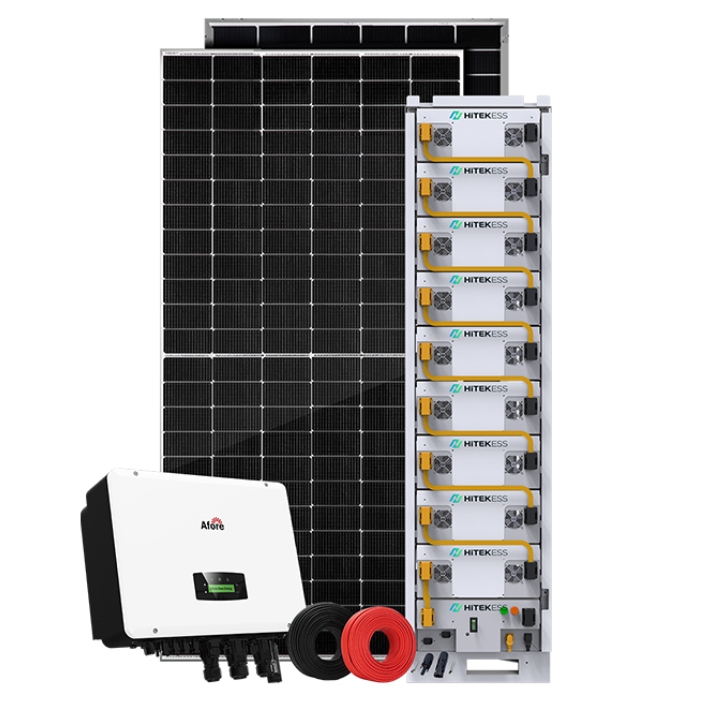
Here is an example, HITEKESS 15KW 30KWH Hybrid Solar System. This equipment includes a highly efficient hybrid inverter and a battery bank with 30KWH of capacity. The system is very powerful as it can handle both power generated by the solar panels and also acts as a back up power source. The system is also highly scalable which makes it suitable for households with growing needs of energy.
Simple Residential Energy Storage ROI Framework
Here is a simple way to go through the numbers with a homeowner.
Basic Assumptions (2026 averages)
- System size: 15kW inverter + 30.72kWh storage
- Installed cost before incentives: $18,000–$24,000
- After incentives: $11,000–$16,000
- Annual electricity savings: $1,800–$3,200 (depending on local rates and usage)
- Battery lifespan: 10–15 years with proper cycling
- Degradation: ~2% per year
Sample ROI Calculator Table
| Scenario | Net Cost After Incentives | Annual Savings | Payback Period | 10-Year Net Benefit |
|---|---|---|---|---|
| High Usage / High Rates | $12,500 | $2,900 | 4.3 years | +$16,400 |
| Average Family Home | $13,800 | $2,300 | 6.0 years | +$9,200 |
| Conservative (Lower Savings) | $15,000 | $1,700 | 8.8 years | +$2,000 |
These numbers are based on typical U.S. or European time-of-use electricity rates and solar pairing. The actual payback period for your local situation may vary. However, for most quality installations, payback will occur within the warranty period.
Factors That Actually Move the Payback Needle
Electricity Rates and Rate Structure:Homes on time-of-use plans see the fastest returns. Charging batteries during cheap hours and using stored power during expensive peaks makes a big difference. One family in Texas cut their summer bills by over $220 per month after installing a similar system.
Solar Pairing: A residential energy storage system paired with solar panels almost always delivers better ROI than storage alone. Excess daytime solar production gets stored instead of sent back to the grid at low rates.
Incentives and Financing: Incentives such as federal tax credits and state rebates; and financing at low interest rates, have paid back in a matter of years rather than decades. Most distributors have a finance company that allows for monthly payments which are less than what the utility bills are for the first year.
Usage Patterns: A home that needs power in the evening, or as a back-up, could be a candidate to benefit from an independent home system. If the home has an EV, home office, or has special medical equipment then a financial analysis would be ideal to determine the best option.
Battery Quality and Warranty: Not all batteries are created equal. High quality battery systems equipped with robust BMS protection and strong warranties on cycle life enable to mitigate potential risks and leads to a higher quality payback projection.
Real Homeowner Examples
A suburban family in New Jersey with high summer air-conditioning loads installed a 15kW/30kWh system. Their payback came in just under 5.5 years thanks to peak shaving and occasional grid outages. Another homeowner in Arizona achieved payback in 4.8 years by combining the system with rooftop solar and smart home controls.
These are not special cases I have cherry picked to make a point. They are representative of what most distributors see when they set realistic expectations at the start.
How Distributors Can Use This Tool Effectively
Take a simple calculator or one page summary to every consultation and outline best case, average and worst case scenarios. Clearly outline the assumptions taken to arrive at your conclusion. Homeowners respect honesty and will generally trust your advice if you outline all the possibilities in full detail.
Focus on total cost of ownership rather than just payback. Include reduced outage risk, increased home value, and energy independence as additional benefits that don’t show up in pure financial math.
HITEK ENERGY CO.,LTD as an Energy Storage Products Manufacturer
HITEK ENERGY CO.,LTD is energy storage products manufacturer which focus on designing prismatic LiFePO4 lithium battery cells, energy storage system modules and complete energy system solutions for Residential, Commercial and Utility Grid applications. HITEKESS goal is delivering safest, most consistent performing energy storage systems with the longest possible battery cycle life.
The company operates two dedicated R&D centers and maintains ISO9001, ISO14001, and ISO45001 certified processes. Their highly automated production lines support scalable residential solutions like the HITEKESS 15KW 30KWH hybrid system. With over 15 years of related power electronics experience and a growing global footprint, HITEK delivers practical, reliable systems that distributors can confidently recommend to homeowners.
Conclusion
The residential energy storage system market has reached an important milestone in 2026. With lower battery costs and strong incentives, payback periods have become attractive enough for mainstream homeowners. Distributors who arm themselves with clear, honest ROI calculations gain a real advantage in sales conversations.
Use real numbers, show the various scenarios and focus on the total value to the homeowner. Homeowners don’t expect you to have all the answers but they want you to show them that the investment will work for their family. In this market those who deliver confidence are winning more business.
FAQs
What is a realistic payback period for a residential energy storage system in 2026?
For good quality installations we expect a payback period of between 5 and 8 years. The payback period depends on the local electricity price, how much electricity a household is already generating from their solar system, and the amount of incentives which are available to buy an energy storage system.
How does the HITEKESS 15KW 30KWH battery storage system affect the payback period?
Due to the high performance of the Hybrid Inverter and the large storage capacity of 30.72kWh, the HITEKESS 15KW 30KWH supports a high self-consumption and a good power supply, which results in a better payback compared to smaller systems.
Should I promise a specific payback period to homeowners?
It’s better to show a range of realistic scenarios rather than one fixed number. This builds trust and prepares customers for variations in actual savings.
What factors can shorten the payback period of a residential energy storage system?
High electricity rates, time-of-use plans, good solar production, available incentives, and high evening energy usage all help accelerate returns.
Is it worth adding storage to an existing solar system?
Yes. In many cases, adding storage to existing solar delivers faster payback than storage alone because it maximizes the value of power you already produce.
HITEKESS Hot Selling Residential Hybrid Solar Energy Systems
1. Complete off Grid Solar System 20kw Solar System 15kw 30kw Solar System off Grid Solar Power System
Model: HT20KW-HY
2. Easy Installation Good Performance 5kw 10kw 15kw 20kw Offgrid Solar System 220V 380V 30kw Hybrid Solar System Home Use Complete Kit
Model: HT10KW-HY
3. Trina Solar Panel 5kw 10kw Solar System off Grid Solar Power System 5000W 10000W
Model: HT10KW-OFF
4. High Efficiency 15kw 20kw 30kw on off Grid 30kw Solar System Home Power with Lithium Ion Batteries
Model: HT10KW-HY
5. South Africa Offgrid Hybrid Solar System150kw 120kw 100kw 50kw 30kw 50kwh 100kwh Solar Power System with LiFePO4 Battery Backup
Model: HT50KW-HY