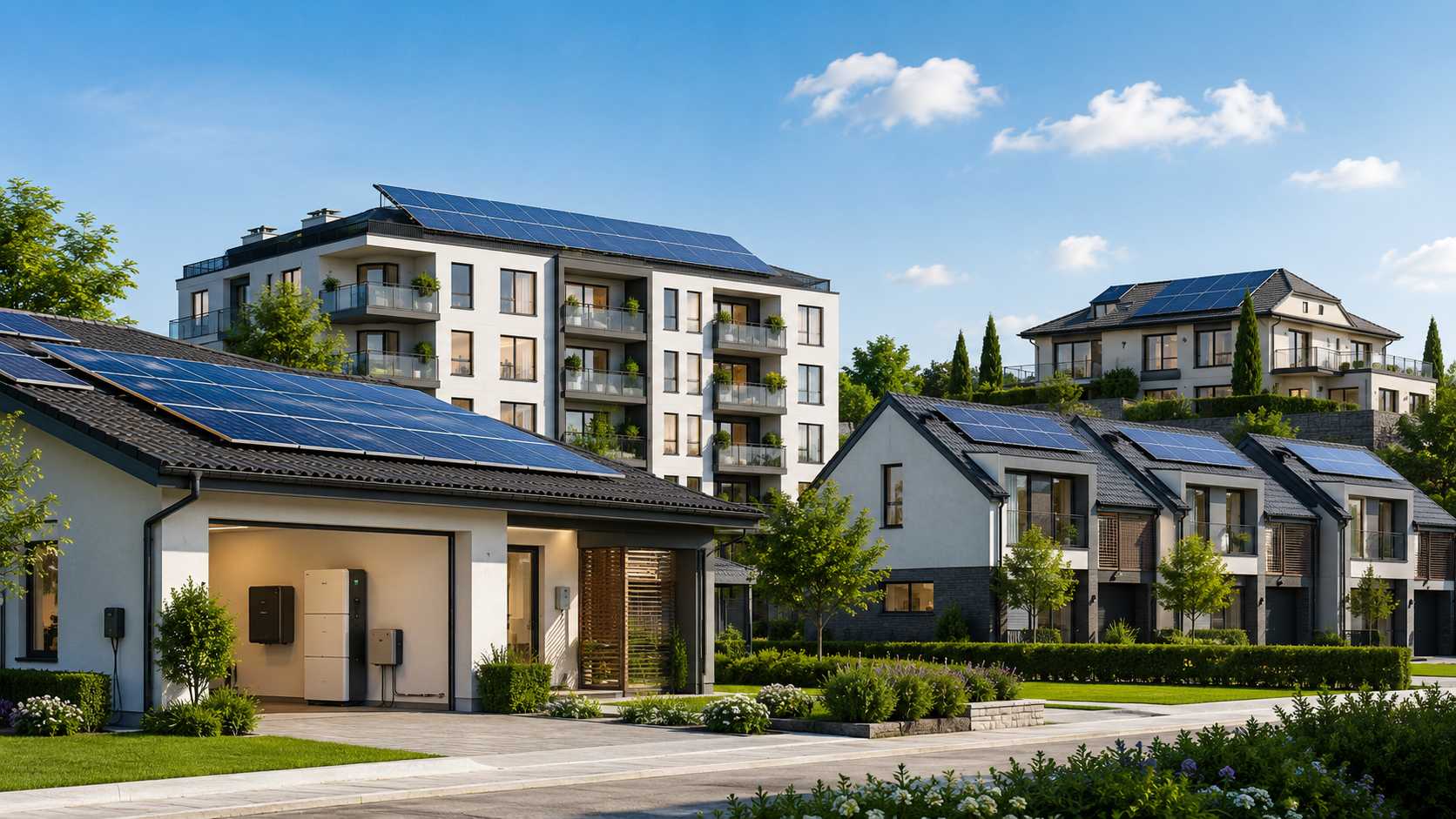
Solar power in the home is now more than just the rooftop story. Different structures such as a one-story house, an apartment block in the city, a residential building with multiple stories, and even a villa carrying weighty loads require a different approach to their systems. Ideal solar energy at home begins with the structure itself.
Why Home Type Changes the Solar Plan
Most buyers first ask for panel size. That helps, but it is not enough. A residential solar system should match the load pattern of the home. A family that uses air conditioning mostly at night needs a different setup from a couple who runs washing machines, pumps, and kitchen appliances during the day.
Key checks before system design
A useful site survey should cover more than roof measurements. These points usually decide whether a solar power system for home use will feel practical after installation:
- Daily electricity use in kWh, not only the monthly bill
- Peak load from air conditioners, pumps, ovens, or EV chargers
- Roof direction, slope, material, and shade
- Backup loads such as refrigerators, lights, routers, gates, and medical devices
- Space for batteries, inverters, cables, and safety clearance
- Local rules for grid connection and export limits
The result should not be a random kit. It should be a home solar energy storage system that fits the building like a utility room plan.
Single-Story Houses: The Easiest Starting Point
Single-story houses often have the cleanest path to rooftop solar. A rooftop solar system for homes can cover a large share of household demand with good sun exposure.
Best setup for a single-story house
A good combination for a solar system in one-story houses would be to have a medium-sized photovoltaic panel, a hybrid inverter and battery backup. If the household is at home during daytime hours, then the solar system can power the household appliances. If most people leave early and return after sunset, storage matters more.
Consider an average two or three-bedroom house that includes a refrigerator, fans, lights, washing machine, television, and maybe one or two air conditioners. The absence of a battery means that some energy from the midday sun might be wasted or sold cheaply. If there’s a lithium battery, then the day time electricity can be saved and used at night for cooking, cooling, lighting, and cell phone charging.
When customers evaluate the alternatives, their first consideration is straightforward: what needs to remain running during the outage? If lights, Wi-Fi connection, a refrigerator, and some sockets are among the answers, then perhaps a smaller battery will suffice. But if the answer involves air conditioners or a water well, then more room is required.
Multi-Story Residential Buildings: Shared Loads Come First
Multi-story residential buildings bring a different problem. The roof may be large, but there are also more families, more meters, and shared equipment. That makes solar panels for multi-story residential buildings more about smart load priority than total independence for every apartment.
Where solar power works best
In many buildings, the first solar target should be shared loads. These may include corridor lights, CCTV, gate motors, water pumps, elevator standby systems, parking lights, and security-room equipment. A solar energy solution for residential buildings can cut common-area bills and provide backup for services residents notice immediately when the grid fails.
A solar system for apartments can also support selected household circuits if the building has clear metering rules. Still, cable routes, roof rights, fire access, noise from equipment rooms, and battery placement all matter.
Villas and Large Homes: Plan for Heavy Loads
Villas, large country houses, and high-end homes often have bigger roofs and higher energy demand. Central air conditioning, pool pumps, garden lighting, water pressure systems, induction cooking, EV charging, and security systems can create strong evening loads. This is where a hybrid home solar system becomes more useful than a simple on-grid array.
Choosing capacity for villas
A solar energy system for villas should begin with a room-by-room load list. A large home may need separate circuits for critical loads and non-critical loads, so the system does not drain the battery too fast.
| Home type | Main challenge | Practical solar approach |
| Single-story house | Good roof access, moderate loads | Rooftop PV with optional battery backup |
| Multi-story building | Shared roof and many users | Solar for pumps, lighting, security, and common loads |
| Townhouse | Limited roof space | High-efficiency panels and careful string layout |
| Villa or large home | High evening demand | Hybrid solar with larger battery storage |
| Weak-grid or off-grid home | Unstable supply | Battery-led design with backup load planning |
For villas, ground-mounted solar panels may also work well if the property has open land. They are easier to clean and can be angled for better annual output.
Townhouses and Small Roofs: Power Density Matters
Townhouses often have narrow roofs, dormers, chimneys, skylights, or shade from the next building. In this case, adding more panels is not always possible. High-efficiency solar panels for homes become the better route because every square meter has to work harder.
How to get more from limited roof space
Designing should take care to not include panels that are highly shaded together with those that are not shaded in a manner where the entire string is negatively affected. For instance, having three panels installed on the western roof would be more valuable than including an additional panel in a shaded area.
Townhouse buyers should ask for a roof map with panel placement, cable route, inverter location, and expected daily generation. That is more useful than a sales sheet showing a perfect lab output number.
Off-Grid and Weak-Grid Homes: Batteries Are the Core
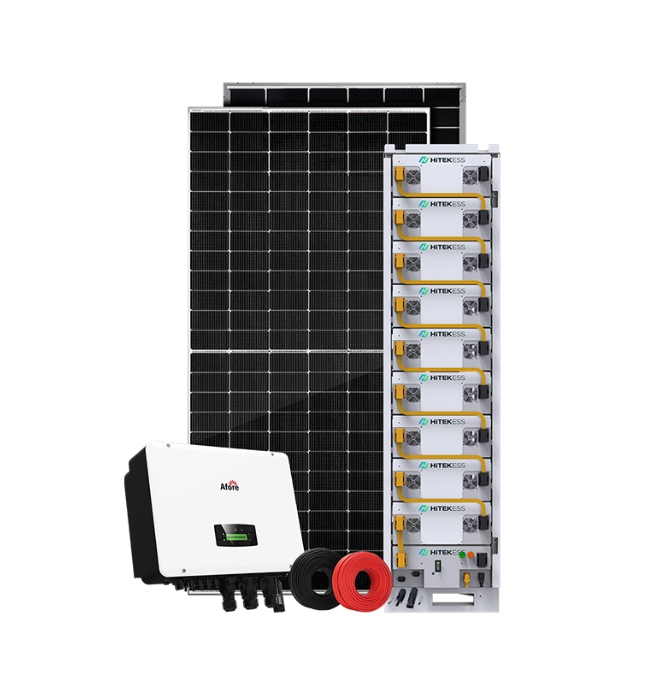
For rural homes, islands, farms, mountain houses, and places with weak grid supply, solar panels are only one part of the answer. The battery and inverter decide whether the house can run through the night, start pumps safely, and handle several cloudy days.
What to size first?
Start with backup needs, not panel count. A refrigerator, lights, router, fans, small water pump, and phone charging may need a modest daily energy reserve. Add air conditioning, electric cooking, or large pumps, and the storage need rises quickly. An off-grid solar system for home use should also include space for battery expansion when the family adds appliances later.
Hybrid inverters are useful in weak-grid areas because they can combine solar, battery, and grid input. When the grid fails, the system can switch to stored energy for selected circuits. This is the practical value of solar battery backup for home use: the lights stay on, food stays cold, and basic work can continue.
Main Components of a Reliable Home Solar System
A residential solar system is not only panels on a roof. It is a set of parts that must work together in heat, dust, rain, daily charging, and sudden load changes.
What each component does
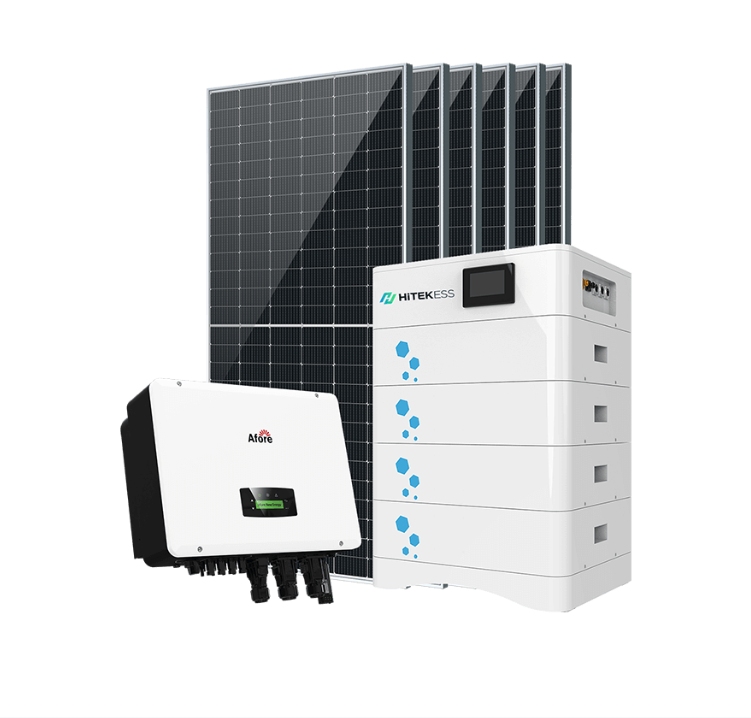
The solar panels convert the sun’s energy to DC power. The hybrid inverter controls and regulates the generated power for domestic uses, feeding to the power grid, and charging batteries. Lithium battery is the storage unit where any excess solar power gets stored for use at night time. Battery Management System monitors the voltage, current, temperature, and charge level of the battery.
Ask for the datasheet of the components, wiring diagram, battery safety data sheet, warranty information, installation procedure, and after-sales service details.
About HITEK ENERGY CO.,LTD
HITEK ENERGY CO., LTD. is an energy storage products manufacturer focused on lithium battery cells, pv modules, and system-level storage solutions. Its product range covers residential energy storage, commercial storage, containerized battery energy storage, on-grid solar systems, lithium batteries, inverters, and solar panels. This mix is useful for buyers who prefer one supplier path for core solar storage components rather than sourcing each part separately.
HITEKESS’ work includes energy storage products for residential systems, smart grids, large power grids, commercial storage, and backup power. For installers, distributors, and project buyers, that matters because residential solar is not a one-time sale.
Conclusion
The right solar energy for homes depends on the home type. A single-story house may benefit most from a clean rooftop system and practical battery backup. A multi-story residential building should start with common-area loads. A townhouse needs high power density and careful panel placement. A villa or large home usually needs a hybrid home solar system with more storage and stronger load planning. Weak-grid and off-grid homes should treat the battery as the center of the system.
Questions fréquentes
What size residential solar system is best for a single-story house?
It will depend on the kWh per day used, available roof space, and back-up needs. Single-story homes often begin with a moderate-size rooftop solar array and include batteries for evening usage or blackouts.
Can solar panels work well for multi-story residential buildings?
Yes. Solar panels for multi-story residential buildings are often best used for shared loads first, such as lighting, pumps, access control, cameras, and security rooms. Full apartment-level supply needs clearer metering and roof-space planning.
Do villas need larger home solar energy storage systems?
Often, yes. Villas usually have heavier loads such as pool pumps, central cooling, outdoor lighting, and EV charging. Larger battery storage helps cover evening demand and keeps key circuits running during outages.
HITEKESS BEST SELLING HOME ENERGY STORAGE SYSTEMS
- Installation facile Bonne performance 5kw 10kw 15kw 20kw système solaire hors réseau 220V 380V 30kw système solaire hybride Kit complet d'utilisation domestique
Modèle: HT10KW-HY
- Complete off Grid Solar Power System 30kw 20kw Solar Battery Storage Systems 10kwh Ht Solar 10kw Price for The Whole House
Modèle: HT30KW-HY
- Haute efficacité 15kw 20kw 30kw sur hors réseau 30kw système solaire alimentation domestique avec batteries lithium-ion
Modèle: HT10KW-HY
- Hitekess Complete Set 3kw 5kw 5000W 5kwh 10kwh 15kwh PV Storages 10kw off Grid Solar System Solar 10kw Complete Energy System for Home Use
Modèle: HT5KW-OFF
- Systèmes d'énergie solaire Hitek 10kw 12 Kw 15kw 20kw 20000W Systèmes d'énergie solaire à domicile 30kw hors réseau complet avec batteries au lithium en gel
Modèle: HT20KW-HY