Farmers face tough choices these days. Land gets scarcer, energy costs climb, and weather throws curveballs. What if one setup could handle both food growth and clean power? That’s where agrivoltaics steps in. This approach pairs solar panels with crops or livestock on the same ground. It boosts land use without cutting into farm output. Folks in rural areas see real gains here, from steady income to healthier soil. Dive deeper to see how it works and why it matters.
Understanding Agrivoltaics
People hear about solar farms taking over fields, but dual use solar projects flip that script. They let sunlight fuel panels while shading plants below. No more picking one over the other.
Defining Agrivoltaics and Dual Use
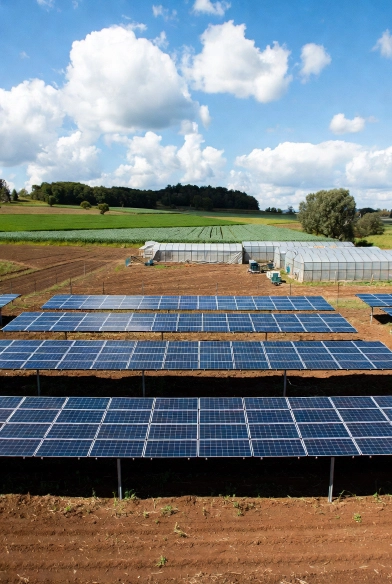
Agrivoltaics means solar setups that share space with agriculture. Panels sit higher up, maybe six to eight feet off the ground. This leaves room for tractors or animals. Think sheep munching grass under rows of panels. Or veggies like lettuce thriving in partial shade. Data shows some crops yield 10-20% more in these spots because shade cuts water loss. Farms in dry areas, like parts of California, use this to stretch irrigation further.
A quick shift shows how setups vary. Some projects focus on grazing, others on row crops. All aim for balance.
How Agrivoltaics Works in Practice
Panels capture sun for electricity, but the ground stays active. Spacing between rows lets light filter through. In one Colorado site, panels raised higher cost 10% extra to build, yet paid off by growing herbs below. Farmers report less erosion too, as plant roots hold soil tight. It’s not just theory—real farms cut mowing bills by letting sheep handle weeds.
Benefits of Dual Use Solar Projects
Mixing solar with farming brings clear wins. Land stays productive in two ways at once. Costs drop over time, and the environment gets a lift.
This blend suits busy landowners who juggle multiple goals. Let’s break down key perks.
Economic Gains for Farmers
Extra cash flows in from leasing land for panels while keeping crops going. One study found farmers pocket $1,000 per acre yearly from energy firms, on top of harvest sales. Sheep grazers save on feed since panels provide shade and fresh grass. In Massachusetts, a farm grew squash and grazed cattle under panels, doubling land value without losing output.
Environmental Advantages
Soil stays fertile longer. Shade from panels slows evaporation, so fields need 30% less water in hot spells. Pollinators thrive with wildflowers planted around. Bees boost nearby crop yields by 15%. Runoff drops too, keeping streams cleaner. These setups cut carbon footprints—solar power replaces fossil fuels, and active farming locks away CO2 in the earth.
A table sums up main upsides:
| Benefit Type | Description | Impact Example |
| Financial | Dual income from energy and agriculture | Up to $1,000/acre added revenue |
| Water Savings | Reduced evaporation under panels | 30% less irrigation needed |
| Biodiversity | Habitat for pollinators and wildlife | 15% yield boost from bees |
Boosting Energy Production
Solar output holds steady even with crops below. Some designs tilt panels to catch more sun. In Northwest states, projects generate power for thousands of homes while grazing livestock. It’s efficient land use in crowded regions.
Real-World Examples of Agrivoltaics
Stories from the field show this isn’t pie-in-the-sky. Projects pop up worldwide, tailored to local needs.
These cases highlight practical steps anyone can learn from.
Successful Projects in the United States
In Pennsylvania, a college solar farm powers 20% of campus needs. Bees hive nearby, and wildflowers cut maintenance in half. No more weekly mowing—just once a year. Over in Oregon, lavender grows under panels at a university site. Yields match open fields, but with less heat stress on plants. Soil tests show better nutrient hold.
Global Applications and Lessons
Europe leads with berry farms under panels. Shade protects fruits from harsh sun, cutting spoilage by 25%. Asia adapts for rice paddies, where water reflects light back to panels for extra efficiency. These spots teach that starting small scales up fast.
Challenges in Implementing Agrivoltaics
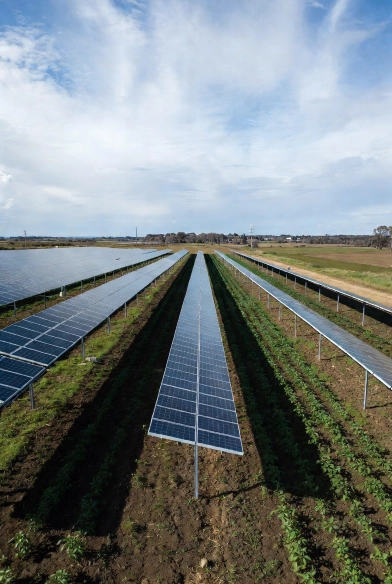
Not everything runs smooth. Setup costs bite, and not all crops fit.
Yet solutions exist, drawn from ongoing work.
Common Hurdles and Fixes
High initial bills for raised panels deter some. Grants from energy departments help offset that. Crop choice matters—shade-loving plants like kale work best. Farmers test small plots first. Community pushback fades when locals see jobs created. One fix: partner with firms offering full support, from design to upkeep.
For more on solar setups that fit farming, check solar products suited to these needs.
Introducing HITEK ENERGY CO., LTD
As a solar manufacturer, HITEK ENERGY CO., LTD focuses on photovoltaic systems and energy storage. Founded in 2016, HITEKESS runs factories in China and serves over 120 countries. They craft solar panels, inverters, and batteries for various scales. Their work emphasizes reliable power for homes and businesses. Services include custom designs and technical help, making solar projects straightforward. Explore their about us page for details on their sustainable focus.
Conclusion
Agrivoltaics ties solar power to farming in ways that last. It handles land crunch, cuts costs, and aids the planet. Farmers gain steady earnings, while energy flows clean. As more projects roll out, this dual path looks set to grow. For those eyeing solar ties to agriculture, tools and know-how stand ready. Head to HITEK ENERGY’s services for project support.
Questions fréquentes
What is agrivoltaics and how does it relate to dual use solar projects?
Agrivoltaics combines solar panels with farming on the same land. It creates dual use solar projects where energy generation happens alongside crop growth or livestock grazing. This setup maximizes land efficiency without sacrificing agricultural output.
What are the main benefits of agrivoltaics for farmers?
Key perks include extra income from energy leases and lower water use under shaded panels. Agrivoltaics benefits also cover soil protection and pollinator support, leading to healthier fields over time.
How can dual use solar projects be implemented on existing farms?
Start with site checks for sunlight and soil. Raised panels allow equipment access. Partner with providers like those at Énergie HITEK for tailored solar solutions that fit farming needs.
Are there any drawbacks to agrivoltaics?
Upfront costs can be steep, and not every crop suits the shade. But grants and careful planning often resolve these, turning dual use solar into a net win.
Where can I find examples of successful agrivoltaics projects?
Look at sites in Colorado or Massachusetts, where veggies and sheep share space with panels. These show real agrivoltaics examples boosting both power and produce.
HITEKESS FAVORITE SOLAR POWER SYSTEM:
- Installation facile Bonne performance 5kw 10kw 15kw 20kw système solaire hors réseau 220V 380V 30kw système solaire hybride Kit complet d'utilisation domestique
Modèle: HT10KW-HY
- Système solaire hybride hors réseau d'Afrique du Sud 150kw 120kw 100kw 50kw 30kw 50kwh 100kwh avec batterie de sauvegarde LiFePO4
Modèle: HT50KW-HY
- Haute efficacité 15kw 20kw 30kw sur hors réseau 30kw système solaire alimentation domestique avec batteries lithium-ion
Modèle: HT10KW-HY
- Long Warranty Hitek 15kw 20kw 30kw Solar Panel Energy Power System Set off Grid Hybrid Storage System
Modèle: HT30KW-HY
- Hitek tout en un système de stockage d'énergie de la batterie solaire Bess 50kw 100kw 150kw 200kw 250kw 500kw Système solaire hybride 1MW avec armoire de batterie distribué
Modèle: HT-100/200-OC